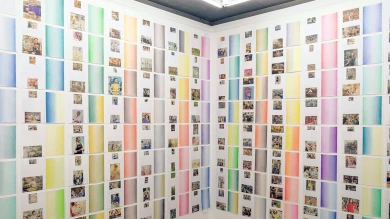
Held on 22, 23 Jun 2023
The Museo’s Study Centre organises two public sessions based on the first edition of Connective Tissue, the Museo Reina Sofía’s Programme of Critical Museology, Artistic Research Practices and Cultural Studies. During the encounter, the team of mobilisers — researchers who drive forward and coordinate, from their different fields, the Programme’s different Seminars and Critical Nodes — share the works developed up to this point and reflect on their predictions. Equally, the group of Resident Student Researchers present their work on posters and in installations and talks with people interested.
The aim of the activity is to share knowledge, learning and projects carried out to date in the different Seminars and Critical Nodes, fibres of a shared research fabric which looks to be projected towards different outlying social, academic and cultural places.
[dropdown]
Juan Andrade is a professor of Contemporary History at the Complutense University of Madrid (UCM).
Raquel Arias Careaga is a professor in the Department of Hispano-American Literature at the Autonomous University of Madrid (UAM).
David Becerra Mayor is a professor of Spanish Literature at the Autonomous University of Madrid (UAM).
Kira Bermúdez is a cultural mediator, social pedagogue, translator and occasional writer.
Carme Bernat Mateu is a student researcher who is writing her doctoral thesis at the University Institute of Women’s Studies and in the Department of Modern and Contemporary History at Universitat de València (UV).
Alberto Berzosa is a researcher with the “Fossil Aesthetics” group from the Spanish National Research Council.
Rubén Blanco Merlo is a professor at the Complutense University of Madrid (UCM) and a member of the Sociología Ordinaria (Ordinary Sociology) research group.
Jesús Carrillo is a professor in the Art History and Theory Department at the Autonomous University of Madrid (UAM).
Florencia Claes is the president of the Wikimedia España association.
Claudia Delso is a cultural manager and mediator.
Xavier Domènech is a professor of Contemporary History at the Autonomous University of Barcelona (UAB).
Ntone Edjabe is a Cameroonian writer, journalist, DJ and founding editor of the Chimurenga magazine.
Yinka Esi Graves is a dancer and choreographer
José Luis Espejo is a researcher, curator and teacher.
Patricia Esquivias is a storyteller and narrator of events, characters and cultural objects through videos and installations.
Oier Etxeberria is the head of the Contemporary Art Department at the Tabakalera International Centre of Contemporary Culture (Donostia-San Sebastián).
Carolina Fernández Cordero is a professor in the Spanish Literature Department at the Autonomous University of Madrid (UAM).
Maite Garbayo-Maeztu is a Serra Hunter professor in the Art History Department at the University of Barcelona (UB).
Antonio García García is a professor of Sociology at the Complutense University of Madrid (UCM).
Jorge Gaupp is an adviser in the Study Centre from the Public Activities Department at Museo Reina Sofía.
Pablo Jarauta is a professor of Design Theory and Culture at the Instituto Europeo di Design (IED) in Madrid.
Germán Labrador is the director of the Public Activities Department at Museo Reina Sofía.
Matteo Locci is a multimedia artist and architectural researcher.
Luisa Martín Rojo is a linguistics lecturer at the Autonomous University of Madrid (UAM) and the director of the international interdisciplinary research centre MIRCo (Multilingualism, Discourse and Communication).
Javier Maseda works in the design and development of digital products, and is a lecturer at the Instituto Europeo di Design (IED) in Madrid and at the University of Castilla la Mancha.
Pedro Medina Reinón is a curator and contemporary art critic.
Pedro Oliver Olmo is a head professor of Contemporary History at the University of Castilla-La Mancha (UCLM).
Jaume Peris Blanes is a professor of Latin American Culture at Universitat de València (UV).
Julia Ramírez-Blanco is a Ramón y Cajal researcher at the Complutense University of Madrid (UCM).
María Rosón is a professor of Contemporary Art History at the Complutense University of Madrid (UCM).
María L. Ruido is a film producer, visual artist, researcher and teacher.
Tania Safura Adam is a journalist, cultural critic and the founder of Radio África Magazine.
Mabel Tapia is the deputy artistic director of Museo Reina Sofía.
Ana Teixeira Pinto is a writer, cultural theorist and professor at the Braunschweig University of Art and a Theory tutor at the Dutch Art Institute.
Laura Villa is a contract researcher on the Tomás y Valiente programme at the Autonomous University of Madrid (UAM).
Jaime Vindel is a head researcher in the “Fossil Aesthetics” and “Energy Humanities” groups at the Spanish National Research Council.
[/dropdown]
Thursday, 22 June 2023
9am Presentation
10am First Research Fabric Workshop
12:30pm Second Research Fabric Workshop
4:30pm Activation of Panels and Discussions
Friday, 23 June 2023
9:30am Third Research Fabric Workshop
12:30pm Fourth Research Fabric Workshop
4:30pm Activation of Panels and Discussions
Organised by
Museo Reina Sofía
Inside the framework of
Participants
Participants
Más actividades
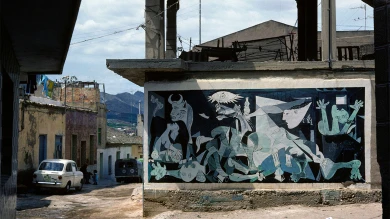
Rethinking Guernica
Monday and Sunday - Check times
This guided tour activates the microsite Rethinking Guernica, a research project developed by the Museo Reina Sofía’s Collections Area, Conservation and Restoration Department and the Digital Projects Area of the Editorial Activities Department, assembling around 2,000 documents, interviews and counter-archives related to Pablo Picasso’s painting Guernica (1937).
The visit sets out an in-situ dialogue between the works hung around the painting and a selection of key documents, selected by the Museo’s Education Team and essential to gaining an idea of the picture’s historical background. Therefore, the tour looks to contribute to activating critical thought around this iconic and perpetually represented work and seeks to foster an approach which refreshes our gaze before the painting, thereby establishing a link with the present. Essentially revisiting to rethink Guernica.
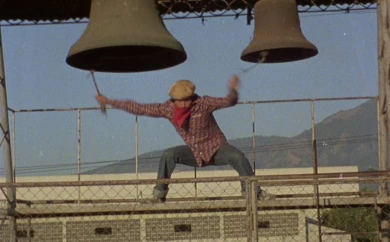
Files of Tropical Revolutions
Sábado 20 y 27 de junio, 2026 - 19:00 H
The Reframing Banana Imagery series concludes with two works that condense the height and twilight of this period in history, epic sagas that cross borders and registers to embody experiences of armed struggle in the region. Cameras mix with firearms, borders between nations blur and patience reaches breaking point. This is where the tipping point lies, where the bloodshed weighs heavy and the murmurings of regional brotherhood are buried in the ground again.
Pan y dignidad (Carta abierta de Nicaragua) [Bread and Dignity (An Open Letter to Nicaragua)] recounts the historical records and process of national reconstruction in Nicaragua via the Sandinista popular uprising. Historias prohibidas de Pulgarcito (Forbidden Tales of Tom Thumb) places the camera at the heart of the El Salvador revolutionary struggle, interspersing testimonies of daily violence with the verses of the poet Roque Dalton.
Both works understand the armed revolution as an open file under construction. The insurgent brotherhood, although dissolved, still resounds in regional history.
Circling Over Exploited Bodies
Friday, 19 and 26 June 2026 - 7pm
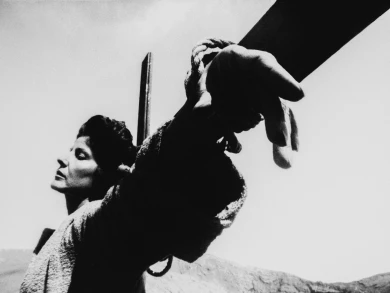
When forms of violence are inflicted on society, film responds from urgency. Images become abstract, sounds fade and the register of dissidence comes from the gut. La zona intertidal (The Intertidal Zone) is an essayistic and poetic approach to the repression of teachers in El Salvador in the 1970s — a teacher studies the biodiversity of the El Salvador coast as a boy finds a body on the same beach. A propósito de la mujer (About Women) interweaves testimonies of misery and rage towards patriarchal structures with fictional scenes of a symbolic procession through a harsh desert.
Both films understand the body as a target of violence and a territory of insurrection, a space where the blood shed by militancy and the patriarchal yoke turn pain into denouncement and existence outside the status quo into an act of political dissidence.
Central American Designation of Origin
Thursday, 18 and 25 June 2026 - 7pm
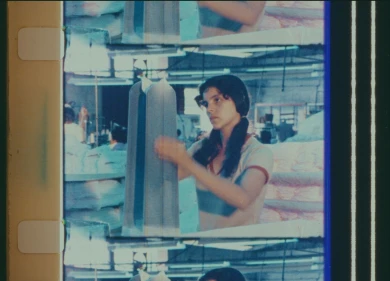
Fertile lands, farmers’ hands, rural faces. This first programme in the series Reframing Banana Imagery understands the foundations of the Central American experience from exploitation, extractivism and displacement, and from the organisation and resistance that emerged as a reaction. The four films within extend from a lyrical documentary on farmers’ solidarity to the playful subversion of the institutional format of the United Fruit Company.
Bananeras (Banana Growers) is a combative portrait of the inhumane conditions of the American banana plantations located in Nicaragua through much of the twentieth century. Costa Rica Banana Republic is a perspicacious satire via an institutional documentary of banana production, spotlighting the extractive nature of this agro-exporting model in the 1970s. Organización Campesina (Farmers’ Organisation) frames rural resistance in Honduras from a direct depiction and lyrical documentary, while Dos veces mujer (Two Times a Woman) dissects the invisibility of the double-shift working day Central American women farmers endure: working in the countryside and working in the home. As a whole, the works here present the earth at once as a wounded body and a space of dignity.
equipoMotor
Jueves alternos, 23 de octubre, 2025 - 11 de junio, 2026 - 17:30 h
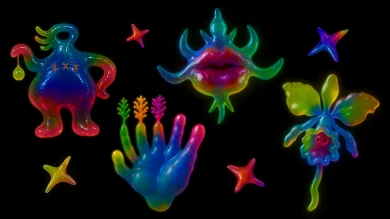
El programa equipoMotor regresa en su edición 25-26 con un aire espectral y mutante para lanzar la pregunta: ¿y si el Museo fuera «un poco más Frankenstein»? Inspirándose en dicho monstruo y en todas aquellas criaturas que desafían la norma desde los márgenes, el proyecto de mediación cultural Galaxxia diseña y acompaña una edición incisiva, intergeneracional y descentralizadora, donde saberes invisibilizados, cuerpos raros y deseos molestos se entrelazan para generar nuevas formas de imaginación crítica y radical. En los sótanos y corredores del Museo —un particular laboratorio— las dudas no se esconden: son materia prima.
Así, para este curso el equipoMotor convoca a personas de todas las edades que hayan participado en ediciones anteriores de los distintos equipos del Área de Educación a recorrer el Museo como quien manipula un cuerpo abierto: descoyuntando algunas de sus categorías teóricas y artísticas —la necropolítica, lo crip-cuir, la lucha de clases, las políticas del malestar, la decolonialidad, la temporalidad cuir, la descentralización institucional o el feísmo— para articular un relato díscolo, remendado y palpitante.
El programa se estructura en bloques temáticos sobre lo freak como metodología, el trabajo cultural, la intergeneracionalidad y la diversidad territorial. Cada bloque a su vez se despliega en sesiones que combinan disparadores teóricos y estéticos, visitas a exposiciones y espacios liminales del Museo, talleres artísticos con artistas, ejercicios de curaduría audiovisual colectiva y de relatoría radiofónica, así como instancias de activación pública, mediante proyecciones de cine experimental y coloquios compartidos con el público, en complicidad con el archivo Hamaca y el Área de Cine y Nuevos Medios del Museo.
De este modo, la presente edición incorpora una particularidad: el grupo de participantes irá transformándose en un «colectivo curatorial audiovisual temporalmente autónomo», con capacidad de incidir en la programación del Museo y de abrir la conversación de equipoMotor al público general, cuestionando y expandiendo así los límites entre las cabezas que deciden, las manos que producen y los cuerpos y presencias que habitan la institución. Las personas seleccionadas en la modalidad oyente serán invitadas a las proyecciones públicas, así como a otras activaciones y momentos de apertura del equipoMotor.
Frente al relato de un museo homogéneo, pulcro y lineal, apostamos por un Museo disidente, contradictorio y lleno de vida residual. Un Museo que no tema hacerse preguntas incómodas ni mostrar sus cicatrices. equipoMotor. Un poco más Frankenstein no busca repensar el cuerpo de la institución, sino habitarlo en sus desgarros, tal como es: híbrido, inacabado, infecto, fantasmagórico… y cargado de esporas y chispas por venir.