-
Monday, 11 June – from 5pm to 9pm
Session 1. The Society of Stress
Accompanied by Amador Fernández Savater
Reading:
Suely Rolnik, “¿Una nueva suavidad?”, in Félix Guattari; and Suely Rolnik, Micro política. Cartografías del deseo, Madrid, Traficantes de Sueños, 2006There are more and more bodies that, to different degrees, feel the obligations that are a by-product of living as a force that carries on its shoulders a constant state of unease. Anxiety, stress, exhaustion, and fatigue are words chosen by some theorists to describe the mutations of a society that distances itself farther from well-being with every crisis, while forms of contemporary production and reproduction demand more docile and precarious bodies.
-
Wednesday, 20 June – from 5pm to 9pm
Session 2. Début d'une lutte prolongée...
Accompanied by Guillermo Rendueles
Readings:
Félix Guattari, “Anti-psiquiatría y anti-psicología” and “El circuito alternativo de la psiquiatría”, from La revolución molecular, Madrid, Errata naturae editores, 2017Film:
Peter Robinson, Asylum, USA, 1972, about Dr. Laing's Archway Community (96’)This session seeks to analyze current illnesses beginning with the revision of a series of experiences that imagined an alternative future in the 1970s: Franco Basaglia's position in favor of socialized care, the ennobled marginalization of the Socialist Collective of Patients (SPK) in Heidelberg, the right to be mentally ill demanded at La Borde or in the sit-ins and strikes held by anti-Francoist psychiatrists. All these experiences, through different means, insist on the need to reflect on the relationship between clinics and politics, not as a dimension of personal life, but rather as the effect of certain social phenomena that stem from modes of production and domination.
-
Wednesday, 27 June - from 5pm to 9pm
Session 3. Other-transformation
Accompanied by Franco Castignani and La Rara Troupe
Readings:
Félix Guattari, “Devenir niño, devenir maleante” and “Devenir mujer”, from La revolución molecular, Madrid, Errata naturae editores, 2017
Fernand Deligny,Semilla de crápula,Buenos Aires, Editorial Cactus and Tinta Limón Ediciones, October 2017Film:
Fernand Deligny, Josée Manenti and Jean-Pierre Daniel, Le moindre geste, France, 1971 (101’)The pragmatic essays of Fernand Deligny and the collaboration between Félix Guattari and Gilles Deleuze (in their work Capitalismo y esquizofrenia) on how subjectification must transcend individual limits, sketch a singular and at the same time multiple way of being. It concerns pragmatics and a new epistemology that go beyond schizophrenia as a limit of capitalism, as demonstrated in the program of recent feminist struggles and in the work of different collectives that, bringing together people diagnosed and non-diagnosed, explores sensitivity and daily life as the center of the political sphere. Part of the session will take place in Dora García's Second Time Around exhibition hall.
-
Wednesday, 4 July – from 4pm to 7pm
Session 4. Exile
Accompanied by Montserrat Rodríguez Garzo
Readings:
Jacques Lacan, Seminario 7. La ética del psicoanálisis, Buenos Aires, Paidós, 1988Film:
Horacio Valcárcel, Psiquiatría social, Spain 1970 (11’)This session investigates exile as a place in the world basing it on the paths of two conflictive exiles, through Jacques Lacan, François Tosquelles, and Oscar Masotta. Using this focus as a foundation one can consider exile as a necessary way of being, and from where one can confront the primary deprivation borne out of the separation from one's roots. At the same time, and using it as an example, it is possible to come to terms with ostracism as one's own style, as an expression of individuality.
A Possible Strength: Towards a Poietics of Living Together
Reading group

Held on 11, 13, 20, 27 Jun, 04 Jul 2018
In the world today, madness is undoubtedly present: one either forms part of it or trivializes what a panic attack or depression can be. Unwellness seems to be reduced to a private and personal matter, as if it was possible to simply decide to suffer and not stay in line with the arbitrary notion of what is normal. In addition, attention is diverted away from the political implications of a series of disorders typical of our age, and that, rooted in the precarious conditions of our current lives, turns our existence into an anxious one, with constant stress and a threat of never-ending suffering.
As part of the A Possible Strength: Towards a Poietics of Living Together activities program, this reading group and collective reflection emerge with the goal of revisiting a past that reverberates in the present: from Jacques Lacan and his intuition on illness capitalism, language, and bodies, to the developments and possibilities of being-another, touching on alternative psychiatry, communal experiences, reforms to the assistance to the ill since the 1970s, and finally the current intersection of biology and neo-liberalism, in the twilight of the welfare state, where pain and death are become primordial vectors in new bio-political reasoning.
The proposed series of texts and films seeks to delve into possibilities opened up decades ago by a number of militant-researchers that worked, not only on language and images, but also on the body. On sharing certain physical and psychological symptoms, they were able to show that they are also common. As such, the group looks not only to find discursive negotiation, but also to address different practices, geared towards an exercise in enunciation that imagines new forms of insurrection and revolt.
This workshop is directed to professionals or users of mental health, to interested and affected persons, diagnosed and non-diagnosed, and at those interested in this way of managing this experience.
Program organizer
Alfredo Aracil
Activity inside the programme
Organised by
Museo Reina Sofía within the framework of the Midstream. New ways of audience development in contemporary art project

Participants
Amador Fernández Savater. Independent researcher and political and cultural activist. He also is editor of Acuarela Libros and habitual collaborator with eldiario.es. He has recently published, among others, the Yippie! titles Una pasada de revolución (2015) and Fuera de lugar: Conversaciones entre crisis y transformación (2013).
Guillermo Rendueles. Psychiatrist and essay writer. His works are centered on orthodox psychiatry criticism, social theory, and radical politics. Among his most recent publications are El manuscrito encontrado en Ciempozuelos: análisis de la historia clínica de Aurora Rodríguez (2018) and Las falsas promesas psiquiátricas (2017).
Franco Castignani. Political scientist and independent researcher. His principal areas of interest analyze mutations in contemporary labor, new sensitivities, and the politicization of unwellness.
La Rara Troupe. Thought, reflective, and creative collective dealing with mental health since 2012 in the Department of Education and Cultural Action at the Museum of Contemporary Art of León (MUSAC). Composed of persons diagnosed and non-diagnosed with mental health related illnesses, their activity is based on using audiovisual creation in auto-representation and first-person narration.
Montserrat Rodríguez Garzo. Psychoanalyst, researcher, and exhibition curator. She is co-author of numerous volumes, including the catalog for the Apuntes para una psiquiatría destructiva (Sala de Arte Joven de la Comunidad de Madrid, 2017) exhibition, co-written with Alfredo Aracil, and the book Esquizofrenias y otros hechos de lenguaje. De la clínica analítica del MACBA (2015), with Darío Corbeira.
Más actividades

Files of Tropical Revolutions
Sábado 20 y 27 de junio, 2026 - 19:00 H
The Reframing Banana Imagery series concludes with two works that condense the height and twilight of this period in history, epic sagas that cross borders and registers to embody experiences of armed struggle in the region. Cameras mix with firearms, borders between nations blur and patience reaches breaking point. This is where the tipping point lies, where the bloodshed weighs heavy and the murmurings of regional brotherhood are buried in the ground again.
Pan y dignidad (Carta abierta de Nicaragua) [Bread and Dignity (An Open Letter to Nicaragua)] recounts the historical records and process of national reconstruction in Nicaragua via the Sandinista popular uprising. Historias prohibidas de Pulgarcito (Forbidden Tales of Tom Thumb) places the camera at the heart of the El Salvador revolutionary struggle, interspersing testimonies of daily violence with the verses of the poet Roque Dalton.
Both works understand the armed revolution as an open file under construction. The insurgent brotherhood, although dissolved, still resounds in regional history.
Circling Over Exploited Bodies
Friday, 19 and 26 June 2026 - 7pm
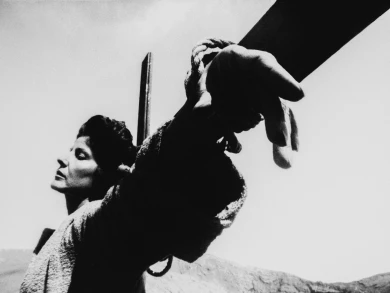
When forms of violence are inflicted on society, film responds from urgency. Images become abstract, sounds fade and the register of dissidence comes from the gut. La zona intertidal (The Intertidal Zone) is an essayistic and poetic approach to the repression of teachers in El Salvador in the 1970s — a teacher studies the biodiversity of the El Salvador coast as a boy finds a body on the same beach. A propósito de la mujer (About Women) interweaves testimonies of misery and rage towards patriarchal structures with fictional scenes of a symbolic procession through a harsh desert.
Both films understand the body as a target of violence and a territory of insurrection, a space where the blood shed by militancy and the patriarchal yoke turn pain into denouncement and existence outside the status quo into an act of political dissidence.
Central American Designation of Origin
Thursday, 18 and 25 June 2026 - 7pm
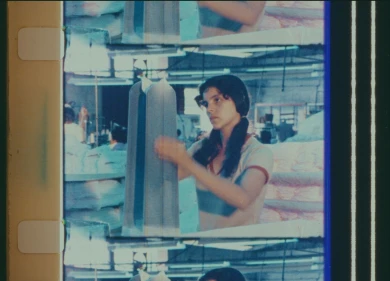
Fertile lands, farmers’ hands, rural faces. This first programme in the series Reframing Banana Imagery understands the foundations of the Central American experience from exploitation, extractivism and displacement, and from the organisation and resistance that emerged as a reaction. The four films within extend from a lyrical documentary on farmers’ solidarity to the playful subversion of the institutional format of the United Fruit Company.
Bananeras (Banana Growers) is a combative portrait of the inhumane conditions of the American banana plantations located in Nicaragua through much of the twentieth century. Costa Rica Banana Republic is a perspicacious satire via an institutional documentary of banana production, spotlighting the extractive nature of this agro-exporting model in the 1970s. Organización Campesina (Farmers’ Organisation) frames rural resistance in Honduras from a direct depiction and lyrical documentary, while Dos veces mujer (Two Times a Woman) dissects the invisibility of the double-shift working day Central American women farmers endure: working in the countryside and working in the home. As a whole, the works here present the earth at once as a wounded body and a space of dignity.

Aesthetics of Peace and Desertion Tactics
8 October 2025 – 24 June 2026
The study group Aesthetics of Peace and Tactics of Desertion: Prefiguring New Pacifisms and Forms of Transitional Justice proposes a rethinking—through both a theoretical-critical and historical-artistic lens—of the intricate network of concepts and practices operating under the notion of pacifism. A term not without contestation and critical tension, pacifism gathers under its name a multiplicity of practices—from anti-militarism and anti-war movements to non-violence activism—while simultaneously opening urgent debates around violence, justice, reparation, and desertion. Here, pacifism is not conceived as a moral doctrine, but as an active form of ethical and political resistance capable of generating aesthetic languages and new positions of social imagination.
Through collective study, the group seeks to update critical debates surrounding the use of violence and non-violence, as well as to explore the conflict of their representation at the core of visual cultures. In a present marked by rearmament, war, genocide, and the collapse of the social contract, this group aims to equip itself with tools to, on one hand, map genealogies and aesthetics of peace—within and beyond the Spanish context—and, on the other, analyze strategies of pacification that have served to neutralize the critical power of peace struggles. Transitional and anti-punitive justice proposals will also be addressed, alongside their intersections with artistic, visual, and cinematic practices. This includes examining historical examples of tribunals and paralegal activisms initiated by artists, and projects where gestures, imaginaries, and vocabularies tied to justice, reparation, memory, and mourning are developed.
It is also crucial to note that the study programme is grounded in ongoing reflection around tactics and concepts drawn, among others, from contemporary and radical Black thought—such as flight, exodus, abolitionism, desertion, and refusal. In other words, strategies and ideas that articulate ways of withdrawing from the mandates of institutions or violent paradigms that must be abandoned or dismantled. From feminist, internationalist, and decolonial perspectives, these concepts have nourished cultural coalitions and positions whose recovery today is urgent in order to prefigure a new pacifism: generative, transformative, and radical.
Aesthetics of Peace and Tactics of Desertion, developed and led by the Museo Reina Sofía’s Studies Management, unfolds through biweekly sessions from October to June. These sessions alternate between theoretical discussions, screenings, work with artworks and archival materials from the Museo’s Collection, reading workshops, and public sessions. The group is structured around sustained methodologies of study, close reading, and collective discussion of thinkers such as Judith Butler, Elsa Dorlin, Juan Albarrán, Rita Segato, Sven Lütticken, Ruth Wilson Gilmore, and Franco “Bifo” Berardi; historical episodes such as the anti-nuclear and anti-arms race movement in Spain; and the work of artists and activists including Rojava Film Commune, Manuel Correa and the Oficina de Investigación Documental (Office for Documentary Investigation), and Jonas Staal, among other initial cases that will expand as the group progresses.
Elisa González and Leah Pattem. Soy Tribulete 7
13 JUN 2026
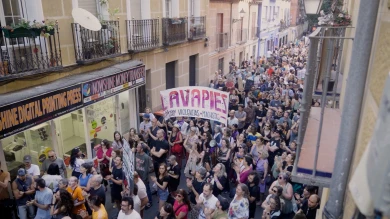
Framed inside this year’s Neighbourhood Picnic is the screening, in the Museo’s Cinema, of a film related to the life and protests of the Lavapiés neighbourhood, addressing issues of gentrification and the right to housing: Soy Tribulete 7 (I Am Tribulete 7, 2026), directed by Elisa González and Leah Pattem.
As the Spanish housing crisis takes hold in Lavapiés, this story begins in February 2024, when the residents of Calle Tribulete, 7, a block of apartments on a street in this Madrid barrio, receive a letter informing them that their building has been sold to a vulture fund. The news spreads quickly around the neighbourhood and, when it comes to the attention of González and Pattem, they grab their cameras and head straight for the building, where they encounter one hundred or so residents still in shock. The film Soy Tribulete 7 flows into the building and the daily lives of a community united, whose looming eviction occasions the fight of their lives. Ultimately, a path of resistance that will turn the community into a symbol of struggle for the right to housing.
Both film-makers worked closely with a group of tenants — Cris, Nani, Blanca, José, María Jesús and Antonia — to tell the story of how the building became the most creative stage of resistance ever witnessed in the area. The work presents the daily life of these residents in Madrid’s now-iconic “building fighting eviction”, depicting their collective struggle and the violent disruption to their lives. Through personal interviews, observational footage, archive material, music and a narration by eighty-year-old actress Ana Martín García, the film casts light on the human stories behind a community struggle.
The Neighbourhood Picnic is an annual gathering of festivities organised by Museo Situado, a network made up of associations, activists and residents from Lavapiés, a racially diverse, working-class neighbourhood where the Museo Reina Sofía is located.