
Held on 04 Apr 2018
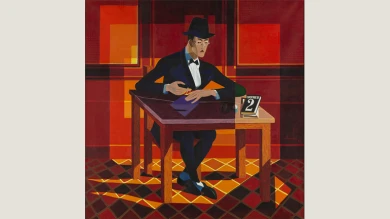
This third session culminates the program "Pessoa: brief history of modern art", a series of three talks in which some of the theoretical keys of modern art are reviewed from the writings of Fernando Pessoa. The lines of the different sessions are: the notion and categories of the avant-garde; the heteronyms, or the multiple lives of the artist under the crisis of modernity; and, finally, the idea of the book as a creation of the world, not as its representation. While the first two encounters have been led by scholars on the author of The Book of Disquiet, this last intervention will be carried out by the novelist and essayist Tom McCarthy. The author of Satin Island or Remainder is one of the most debated and acclaimed contemporary experimental writers. His work explores the possibilities of literature in the times of digital dissolution, a moment in which we regret the loss of hierarchy and authority of the book while any circumstance becomes text.
When writing enters the picture, time changes. Experience can no longer be “innocent” or “pure” — rather (as Proust knows all too well) it will be constantly measured against and detoured via its own mediation, its future setting-down. In this lecture, Tom McCarthy considers the question of temporality and consciousness in relation to the specter of “the Book”, from Cervantes to the Internet age. Does digital culture kill off literature, or does it (on the contrary) accelerate it onwards to its glorious apotheosis? When every moment of our lives, from walking down a street to buying, watching or even “liking” something, are recorded and archived for future parsing by the forces of capital and the law, to be transformed into a set of ledgers that, in turn, will correlate these moments and their patterns algorithmically with other archives, other ledgers — then do history and culture “write” themselves? If so, what might the writer’s role be?
Related activity inside the programme
Organised by
Museo Reina Sofía
In collaboration with
illycaffèParticipants
Tom McCarthy (Stirling, 1969) is a novelist whose work has been translated into more than twenty languages. His first novel, Remainder, won the 2008 Believer Book Award and was recently adapted for the cinema by the artist Omer Fast. His third, C, was a 2010 Booker Prize finalist, as was his fourth, Satin Island, in 2015. McCarthy is also author of the study Tintin and the Secret of Literature, and of the essay collection Typewriters, Bombs, Jellyfish. He contributes regularly to publications such as The New York Times, The London Review of Books, Harper’s and Artforum. In 2013 he was awarded the inaugural Windham Campbell Prize for Fiction by Yale University.
Más actividades
![Chantal Akerman, Woman Sitting after Killing [Mujer sentada después de matar], 2001, instalación. Museo Reina Sofía](https://recursos.museoreinasofia.es/styles/small_landscape/public/Actividades/chantal-akerman-mujer-sentada-despues-matar.jpg.webp)
On Your Screen: Art History and the Museum Facing the Audiovisual Challenge
18, 19 SEP 2026
The conference On Your Screen: Art History and the Museum Facing the Audiovisual Challenge sparks debate around the transformations of art history and museum space upon embracing the audiovisual format. Its starting point is John Berger’s emblematic television series Ways of Seeing (1972), a landmark in the democratisation of art-historical discourse. In the series, Berger illustrated how the transfer of a work such as Goya’s Los fusilamientos del 3 de mayo (The Third of May 1808 or the Executions) from museum gallery to home TV screen completely changed the viewer’s experience, allowing the image to travel to straight to the viewer.
In the twenty-first century, this screen-based ecosystem has expanded exponentially, with museums not only physically integrating screenings and devices into their galleries— following in the wake of many exhibitions on the moving image — but also deploying complex virtual strategies. Equally, numerous en vez de a multitudeof historians, students and creators use digital platforms to circulate their ideas and projects. This audiovisual shift opens access to ignored materials and democratises knowledge, as well as challenging traditional hierarchies and the interpretive authority of institutions. The conference, promoted by the research project ATLAS AV: The Audiovisualisation of Art History and the Museum, seeks to analyse this vast audiovisual material, its archives, and its capacity to transform the memory of art.
Godard and Miéville: Time and Ruin
Friday, 18 September 2026 - 7pm
Inside the framework of the conference On Your Screen: Art History and the Museum Facing the Audiovisual Challenge, this film series sets forth three critical visions of the museum via three sessions featuring the works of John Berger, Jean-Luc Godard and Anne-Marie Miéville, Ariella Azoulay, Alan Resnais and Chris Marker, Kwate Nee-Owoo, and the premiere of short films by Isabel Coixet and La Vulcanizadora (Maria Rojas Arias and Andrés Jurado). In classical theory, the museum gives the world meaning; it contains fragments of the past, granting them a history, a narrative that explains preterite time and the present. Today, there is an implicit assumption that this function hides and legitimises forms of power, yet what if the museum, instead of explaining the world, multiplied it through radical ideas, silenced periods and repressed subjects? Such is the approach of the film-makers and artists in this film season.
In 1972 the writer John Berger opened the landmark television series Ways of Seeing with an iconoclastic gesture: slicing Sandro Botticelli’s painting Venus and Mars (1485) in London’s National Gallery. A transgressive act that recalls contemporary attacks on the museum by dissident youth and with which Berger, after revealing it was a reproduction, sought to ignite debate around the idea of an original artwork and a copy. In this, the hundredth anniversary of his birth, the first session pays homage to one of the great art writers of the twentieth century. Starting with a review of Berger’s audiovisual work by art historians Alberto López Cuenca and Modesta Di Paola, the series begins with the premiere of 100 Years and You Everywhere (2026), an unreleased short film by Isabel Coixet composed as a beautifully crafted letter to Berger, and continues with an analysis of fragments of Ways of Seeing in relation to the museum and contemporary art.
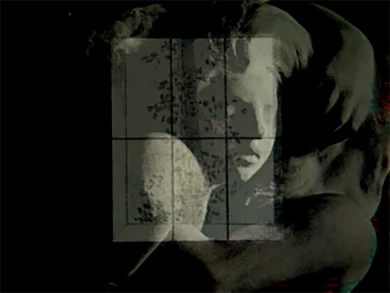
The second session screens two medium-length films by Jean-Luc Godard and Anne-Marie Miéville on time, ruin and museum. In The Old Place. Small Notes Regarding the Arts at Fall of 20th Century (1999), both film-makers consider what remains of that “old place”, the museum, at the close of a century of wars and totalitarianism, and ask whether it should be more of a legend or desire than a place. This same driving principle leads Godard to build his own imaginary museum in Reportage amateur (maquette expo) (2006), a rickety toy museum which, paradoxically, contains the great film-maker’s full power of thought on history and images.
Finally, the third session explores one of the major challenges of recent years: the decolonisation of the museum, the recognition of its link to imperialist discourses of power and the need to situate a new silenced or repressed subject at the centre of the Western narration of history. Under the title Museums and Restitution, it includes the film Undocumented. Unlearning Imperial Plunder (2019), by theorist Ariella Azoulay, Statues Also Die, by Alan Resnais and Chris Marker (1953), Kwate Nee-Owoo’s You Hide Me (1970) and the first screening of the short film Quinto verso, parte de Tonada (Fifth Verse, Part of Tonada), by La Vulcanizadora (Maria Rojas Arias and Andrés Jurado), filmed at the Museo de América in Madrid.
![Ariella Azoulay, Un-documented. Unlearning Imperial Plunder [Indocumentados. Desaprendiendo el saqueo imperial], 2019, película](https://recursos.museoreinasofia.es/styles/small_landscape/public/Actividades/5.diseminar-mundo.jpg.webp)
Museums and Restitution
Saturday, 19 September 2026 - 7pm
Centuries of plundering, decades of amnesia, years of living with unmitigated extractivist power… Does a museum, as we know it, have a raison d'être in a postcolonial society?
This session expounds the operations of the museum as a colonial machine, while putting forward ideas, in narration, for a more just, equal and inclusive institution of the future via society’s marginalised and minority voices. The session begins with the international premiere of Quinto verso, parte de Tonada (Fifth Verse, Part of Tonada), which presents a vision of the Quimbaya Collection (fifth and sixth centuries CE) from the Museo de América in Madrid. It is constructed with the voices and chants of Wayúu mourners and guides, not only as a way of reinstating the role of these gold idols — anthropomorphic figures of men and women used as vessels in ritual practices — but also to imagine that what must be exhibited is not the gold itself. It is the ritual’s own chant. In the classic film You Hide Me (1970), Ghanaian film-maker Kwate Nee-Owoo accesses the British Museum’s collection of African art, located in the building’s basement, to question the meaning behind a museum plundering and nullifying. A fine exercise of first-person institutional critique screened for the first time in Spain. Almost seventy years since Resnais and Marker made Statues Also Die (1953), a reflection on the aura-bearing value of the museum opposite the identity-based and cultural belonging of African art, theorist Ariella Azoulay films the same statues again at the Musée du Trocadéro (today the Musée du Quai Branly), which survive and wait to be reunited with their people. Azoulay, whose wholly original undertaking is a lesson to the museum of the future, connects the forced migration of these sculptures with the mass transit of people crossing borders artificially imposed by the same system that has plundered their culture.
The School of Transformative Institutionalism and Local Organisation
From 21 to 24 September 2026
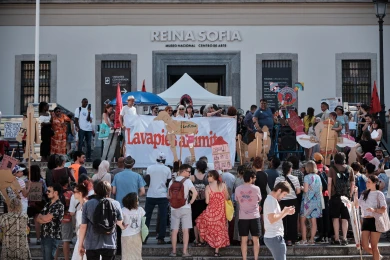
The School of Transformative Institutionalism and Local Organisation (S.T.I.L.O.) is a programme of joint learning and join strategy which sets in motion a process for the exchange of questions, methodologies and experiences between cultural organisations. The overall aim is to create, circulate and prototype tactics, tools and collective knowledge on institutional practices that open new channels for defending culture and advocating structural transformation in divergent geographical contexts.
The project is part of the Laboratorio de Institucionalidad Compartida (The Laboratory of Shared Institutionalism, LIC), a space for the Museo Reina Sofía’s research, work and advocacy centred on developing, experimenting with and systemising practices, protocols and tools which contribute to a fairer and more liveable cultural ecosystem.
For many years now, so-called infrastructural critique in museums questions material, legal and economic infrastructures, among others, as well as the forms of solidarity and practices required to sustain the cultural ecosystem. By approaching current debates, S.T.I.L.O. raises questions on the ways in which organisations define and interpret their practices, organise their relations and respond to the social contexts in which they operate.
The school gathers four cultural organisations that work via different institutional models – scale, contexts, conditions, different working models — with the goal of pooling common strategies and tools of organisation, advocacy and relationships with local communities.
The programme is conceived as a collaborative process with the participation of Arika, La Revuelta, BAK Basecamp and The Tentacular Museum (Museo Reina Sofía) and is structured around preparatory online sessions and an in-person seminar in Madrid.
S.T.I.L.O. is an activity framed inside the working strand of Situated Organisations from L'Internationale’s Museum of the Commons project, which reflects on the role of museums and art organisations as actors within complex social networks and ecosystems, with a view to exploring new ways to democratise institutions and make them more open, inclusive and useful.
![Eli Cortiñas, The Most Given of Givens [Lo más dado de lo dado], 2016, instalación de vídeo de tres canales.](https://recursos.museoreinasofia.es/styles/small_landscape/public/Actividades/charla-eli-corti%C3%B1as.png.webp)
Eli Cortiñas. The Machine Dreams of Smoke
Tuesday, 22 September 2026 at 7pm
In conjunction with the exhibition Eli Cortiñas. The Machine Dreams of Smoke, the Museo Reina Sofía organises a conversation between artist Eli Cortiñas (Las Palmas de Gran Canaria, 1979) and Amanda de la Garza, the Museo’s deputy artistic director, delving deeper into this new show unveiled in Espacio 1.
The conversation takes as its point of departure the recent incorporation into the Museo Reina Sofía Collections of the work The Most Given of Givens (2016), which Cortiñas revisits and expands upon in this exhibition to continue research undertaken more than a decade ago on the relationships between the history of film, the history of museums and contemporary technologies of image production. From a critical perspective, the artist analyses the way in which these devices participate in building imagery, knowledge and forms of power, and how they have historically contributed to producing otherness from a colonial logic.
Across the encounter, Cortiñas shares the research process and archive work underpinning the exhibition, touching on questions such as the construction of colonial imagery through film, the circulation and association of images and the persistence of certain regimes of representation in contemporary visual culture. Moreover, the conversation spotlights the intervention carried out in the hall of Espacio 1, where the museographic device, emptied cabinets and AI-generated images prolong these investigations to reflect on the contemporary mechanisms of production, classification and the transmission of knowledge.
The talk offers the audience the chance to gain first-hand insight into the key conceptual elements and creative process in The Machine Dreams of Smoke, as well as exploring the themes that run through Eli Cortiñas’s practice: the historical construction of the gaze, the persistence of colonial structures in visual culture and the apparent neutrality of technologies and algorithms which today mediate the production and circulation of images.
These inaugural conversations, part of the main working strands of the Museo’s Public Programmes Area, aim to explore in greater depth the exhibition narratives of the shows organised by the Museo from the perspective of artists, curators and specialists.