-
Monday, 6 November
A masterclass with Adam Curtis
Nouvel Building, Auditorium 400
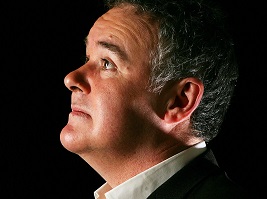
Adam Curtis often insists he is a journalist, not a film-maker or an artist, asserting that his work involves crafting a new analytical and critical model of information and reportage by searching through the discursive and visual montage of images to narrate ideas that emerge in such unhinged times.
-
Tuesday, 7 November
Session 1
Nouvel Building. Auditorium 400
Second screening: Saturday, 18 November – 5pm Sabatini Building. AuditoriumLiving in an Unreal World, 2016
UK, digital archive, colour, 5’
HyperNormalisation, 2016
UK, digital archive, colour, 166’The first session will be presented by Chema González, the Museo Reina Sofía’s Head of Cultural and Audiovisual Programmes at Museo Reina Sofía
![Adam Curtis. HyperNormalisation [Hipernormalización]. Película, 2016](https://recursos.museoreinasofia.es/legacy_programs/1_8.jpg "Adam Curtis. HyperNormalisation [Hipernormalización]. Película, 2016")
-
Wednesday, 8 November
Session 2
Edificio Sabatini. Auditorio
Second screening: Sunday, 19 November – 5pm Sabatini Building. AuditoriumBitter Lake , 2015
UK, digital archive, colour, 136’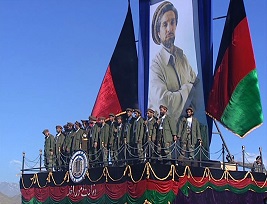
-
Saturday, 11 November
Session 3
Sabatini Building. Auditorium
Second screening: Sunday, 3 December – 5pm. Sabatini Building. AuditoriumEverything is Going According to a Plan, 2013
UK, digital archive, colour, 2’Dancing Remade, undated
UK, digital archive, colour, 10'It Felt Like a Kiss, 2009
UK, digital archive, colour, 54’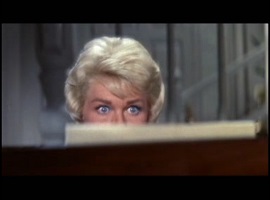
-
Monday, 13 November
Session 4
Sabatini Building. Auditorium
Second screening showing the entire series: Saturday, 25 November – 5pm
Sabatini Building. Auditorium
All Watched Over By Machines of Loving Grace. Episode 1: Love and Power, 2011
UK, digital archive, colour, 60’
Presented by César Rendueles, philosopher, professor at the Complutense University of Madrid and author of Sociofobia. El cambio político en la era de la utopía digital (Sociophobia. Political Change in the Digital Utopia, Capitán Swing, 2013).
![Adam Curtis. All Watched Over By Machines of Loving Grace. Episode 2: The Use and Abuse of Vegetational Concepts [Todos vigilados por máquinas de gracia y amor. Episodio 2: Uso y abuso de conceptos vegetativos]. Película, 2011](https://recursos.museoreinasofia.es/legacy_programs/4_4.jpg "Adam Curtis. All Watched Over By Machines of Loving Grace. Episode 2: The Use and Abuse of Vegetational Concepts [Todos vigilados por máquinas de gracia y amor. Episodio 2: Uso y abuso de conceptos vegetativos]. Película, 2011")
-
Tuesday, 14 November
Session 5
Sabatini Building. Auditorium
Second screening showing the entire series: Saturday, 25 November – 4pm
Sabatini Building. Auditorium
All Watched Over By Machines of Loving Grace. Episode 2: The Use and Abuse of Vegetational Concepts, 2011
UK, digital archive, colour, 60’![Adam Curtis. All Watched Over By Machines of Loving Grace. Episode 3: The Monkey in the Machine and The Machine in the Monkey [Todos vigilados por máquinas de gracia y amor. Episodio 3: El mono en la máquina y la máquina en el mono]. Película, 2011](https://recursos.museoreinasofia.es/legacy_programs/5_3.jpg "Adam Curtis. All Watched Over By Machines of Loving Grace. Episode 3: The Monkey in the Machine and The Machine in the Monkey [Todos vigilados por máquinas de gracia y amor. Episodio 3: El mono en la máquina y la máquina en el mono]. Película, 2011")
-
Wednesday, 15 November
Session 6
Sabatini Building. Auditorium
Second screening showing the entire series: Saturday, 25 November – 4pm
Sabatini Building. Auditorium
All Watched Over By Machines of Loving Grace. Episode 3: The Monkey in the Machine and the Machine in the Monkey, 2011
UK, digital archive, colour, 60’![Adam Curtis. All Watched Over By Machines of Loving Grace. Episode 3: The Monkey in the Machine and The Machine in the Monkey [Todos vigilados por máquinas de gracia y amor. Episodio 3: El mono en la máquina y la máquina en el mono]. Película, 2011](https://recursos.museoreinasofia.es/legacy_programs/6_5.jpg "Adam Curtis. All Watched Over By Machines of Loving Grace. Episode 3: The Monkey in the Machine and The Machine in the Monkey [Todos vigilados por máquinas de gracia y amor. Episodio 3: El mono en la máquina y la máquina en el mono]. Película, 2011")
-
Saturday, 18 November
Session 1, second screening
Sabatini Building. Auditorium
Living in an Unreal World, 2016
UK, digital archive, colour, 5’
HyperNormalisation, 2016
UK, digital archive, colour, 166’
-
Sunday, 19 November
Session 2, second screening
Sabatini Building. Auditorium
Bitter Lake, 2015
UK, digital archive, colour, 136’
-
Monday 20 November
Session 7
Sabatini Building. Auditorium
Second screening showing the entire series: Saturday, 2 December – 5pm
Sabatini Building. AuditoriumThe Trap: What Happened to Our Dream of Freedom. Episode 1: Fuck you, Buddy, 2007.
UK, digital archive, colour, 60’Presented by Marta Peirano, journalist, writer, and deputy director of eldiario.es. She is the author of El pequeño libro rojo del activista en la red (The Little Red Book of the Network Activist, Roca, 2015) and editor of El Rival de Prometeo. Vidas de Autómatas Ilustres (The Prometheus Opponent. Lives of Illustrious Automata, Impedimenta, 2009).
![Adam Curtis. The Trap: What Happened to Our Dream of Freedom. Episode 1: Fuck you, Buddy [La trampa: Qué pasó con nuestro sueño de libertad. Episodio 1: Que te den, colega]. Película, 2007](https://recursos.museoreinasofia.es/legacy_programs/7.png "Adam Curtis. The Trap: What Happened to Our Dream of Freedom. Episode 1: Fuck you, Buddy [La trampa: Qué pasó con nuestro sueño de libertad. Episodio 1: Que te den, colega]. Película, 2007")
-
Tuesday, 21 November
Session 8
Sabatini Building. Auditorium
Second screening showing the entire series: Saturday, 2 December – 5pm
Sabatini Building. Auditorium
The Trap: What Happened to Our Dream of Freedom. Episode 2: The Lonely Robot, 2007
UK, digital archive, colour, 60’![Adam Curtis. The Trap: What Happened to Our Dream of Freedom. Episode 2: The Lonely Robot [La trampa: Qué pasó con nuestro sueño de libertad. Episodio 2: El robot solitario]. Película, 2007](https://recursos.museoreinasofia.es/legacy_programs/8_2.jpg "Adam Curtis. The Trap: What Happened to Our Dream of Freedom. Episode 2: The Lonely Robot [La trampa: Qué pasó con nuestro sueño de libertad. Episodio 2: El robot solitario]. Película, 2007")
-
Wednesday, 22 November
Session 9
Sabatini Building. Auditorium
Second screening showing the entire series: Saturday, 2 December – 4pm. Sabatini Building. AuditoriumThe Trap: What Happened to Our Dream of Freedom. Episode 3: We Will Force You To Be Free, 2007
UK, digital archive, colour, 60’![Adam Curtis. The Trap: What Happened to Our Dream of Freedom. Episode 3: We Will Force You To Be Free [La trampa: Qué pasó con nuestro sueño de libertad. Episodio 3: Te obligaremos a ser libre]. Película, 2007](https://recursos.museoreinasofia.es/legacy_programs/9.png "Adam Curtis. The Trap: What Happened to Our Dream of Freedom. Episode 3: We Will Force You To Be Free [La trampa: Qué pasó con nuestro sueño de libertad. Episodio 3: Te obligaremos a ser libre]. Película, 2007")
-
Saturday, 25 November
Sessions 4, 5 and 6, second screening
Sabatini Building. Auditorium
All Watched Over By Machines of Loving Grace. Episode 1: Love and Power, 2011
UK, digital archive, colour, 60’All Watched Over By Machines of Loving Grace. Episode 2: The Use and Abuse of Vegetational Concepts, 2011
UK, digital archive, colour, 60’All Watched Over By Machines of Loving Grace. Episode 3: The Monkey in the Machine and The Machine in the Monkey, 2011
UK, digital archive, colour, 60’
-
Wednesday, 29 November
Session 10
Sabatini Building. Auditorium
Second screening showing the entire series: Saturday, 9 December – 5pm
Sabatini Building. Auditorium
The Power of Nightmares. Episode 1: Baby It’s Cold Outside, 2004
UK, digital archive, colour, 60’
Presented by Andrés Hispano, essayist, audiovisual producer and professor at Pompeu Fabra University, the Elisava School of Design and Engineering, and other university centres.![Adam Curtis. The Power of Nightmares. Episode 1: Baby It’s Cold Outside [El poder de las pesadillas. Episodio 1: Cariño, hace frío ahí fuera]. Película, 2004](https://recursos.museoreinasofia.es/legacy_programs/10.png "Adam Curtis. The Power of Nightmares. Episode 1: Baby It’s Cold Outside [El poder de las pesadillas. Episodio 1: Cariño, hace frío ahí fuera]. Película, 2004")
-
Thursday, 30 November
Session 11
Sabatini Building. Auditorium
Second screening showing the entire series: Saturday, 9 December – 4pm. Sabatini Building. AuditoriumThe Power of Nightmares. Episode 2: The Phantom Victory, 2004
UK, digital archive, colour, 60’![Adam Curtis. The Power of Nightmares. Episode 2: The Phantom Victory [El poder de las pesadillas. Episodio 2: La victoria fantasma]. Película, 2004](https://recursos.museoreinasofia.es/legacy_programs/11.png "Adam Curtis. The Power of Nightmares. Episode 2: The Phantom Victory [El poder de las pesadillas. Episodio 2: La victoria fantasma]. Película, 2004")
-
Friday, 1 December
Session 12
Sabatini Building. Auditorium
Second screening showing the entire series: Saturday, 9 December – 4pm. Sabatini Building. AuditoriumThe Power of Nightmares. Episode 3: The Shadows in the Cave, 2004
UK, digital archive, colour, 60’![Adam Curtis. The Power of Nightmares. Episode 3: The Shadows in the Cave [El poder de las pesadillas. Episodio 3: Las sombras en la caverna]. Película, 2004](https://recursos.museoreinasofia.es/legacy_programs/12_2.jpg "Adam Curtis. The Power of Nightmares. Episode 3: The Shadows in the Cave [El poder de las pesadillas. Episodio 3: Las sombras en la caverna]. Película, 2004")
-
Saturday, 2 December
Sessions 7, 8 and 9, second screening
Sabatini Building. Auditorium
The Trap: What Happened to Our Dream of Freedom. Episode 1: Fuck you, Buddy, 2007
UK, digital archive, colour, 60’The Trap: What Happened to Our Dream of Freedom. Episode 2: The Lonely Robot, 2007
UK, digital archive, colour, 60’The Trap: What Happened to Our Dream of Freedom. Episode 3: We Will Force You To Be Free, 2007
UK, digital archive, colour, 60’![The Trap: What Happened to Our Dream of Freedom. Episode 1: Fuck you, Buddy [La trampa: Qué pasó con nuestro sueño de libertad. Episodio 1: Que te jodan, colega], 2007](https://recursos.museoreinasofia.es/legacy_programs/7_0.png "The Trap: What Happened to Our Dream of Freedom. Episode 1: Fuck you, Buddy [La trampa: Qué pasó con nuestro sueño de libertad. Episodio 1: Que te jodan, colega], 2007")
-
Monday, 4 December
Session 13
Sabatini Building. Auditorium
Second screening showing the entire series: Sunday, 17 December – 12pm, episodes 1 and 2, and 5pm, episodes 3 and 4. Sabatini Building. AuditoriumThe Century of the Self. Episode 1: Happiness Machines, 2002
UK, digital archive, colour, 60’Presented by Luis Martínez, journalist and film critic for El Mundo.
![Adam Curtis. The Century of the Self. Episode 1: Happiness Machines [El siglo del Yo. Episodio 1: Máquinas de felicidad]. Película, 2002](https://recursos.museoreinasofia.es/legacy_programs/13.png "Adam Curtis. The Century of the Self. Episode 1: Happiness Machines [El siglo del Yo. Episodio 1: Máquinas de felicidad]. Película, 2002")
-
Tuesday, 5 December
Session 14
Sabatini Building. Auditorium
Second screening showing the entire series: Sunday, 17 December – 12pm, episodes 1 and 2, and 5pm, episodes 3 and 4. Sabatini Building. AuditoriumThe Century of the Self. Episode 2: The Engineering of Consent, 2002
UK, digital archive, colour, 60’![Adam Curtis. The Century of the Self. Episode 2: The Engineering of Consent [El siglo del Yo. Episodio 2: Ingeniería del consentimiento]. Película, 2002](https://recursos.museoreinasofia.es/legacy_programs/14.png "Adam Curtis. The Century of the Self. Episode 2: The Engineering of Consent [El siglo del Yo. Episodio 2: Ingeniería del consentimiento]. Película, 2002")
-
Wednesday, 6 December
Session 15
Sabatini Building. Auditorium
Second screening showing the entire series: Sunday, 17 December – 12pm, episodes 1 and 2, and 5pm, episodes 3 and 4. Sabatini Building. AuditoriumThe Century of the Self. Episode 3: There is a Policeman Inside All Our Heads, He Must Be Destroyed, 2002
UK, digital archive, colour, 60’![Adam Curtis. The Century of the Self. Episode 3: There is a Policeman Inside All Our Heads, He Must Be Destroyed [El siglo del Yo. Episodio 3: Hay un policía en nuestras cabezas que debe ser destruido]. Película, 2002](https://recursos.museoreinasofia.es/legacy_programs/15.png "Adam Curtis. The Century of the Self. Episode 3: There is a Policeman Inside All Our Heads, He Must Be Destroyed [El siglo del Yo. Episodio 3: Hay un policía en nuestras cabezas que debe ser destruido]. Película, 2002")
-
Thursday, 7 December
Session 16
Sabatini Building. Auditorium
Second screening showing the entire series: Sunday, 17 December – 12pm, episodes 1 and 2, and 5pm, episodes 3 and 4. Sabatini Building. AuditoriumThe Century of the Self. Episode 4: Eight People Sipping Wine in Kettering, 2002
UK, digital archive, colour, 60’![Adam Curtis. The Century of the Self. Episode 4: Eight People Sipping Wine in Kettering [El siglo del Yo. Episodio 4: Ocho personas bebiendo vino en Kettering]. Película, 2002](https://recursos.museoreinasofia.es/legacy_programs/16_0.jpg "Adam Curtis. The Century of the Self. Episode 4: Eight People Sipping Wine in Kettering [El siglo del Yo. Episodio 4: Ocho personas bebiendo vino en Kettering]. Película, 2002")
-
Saturday, 9 December
Sessions 10, 11 and 12, second screening
Sabatini Building. Auditorium
The Power of Nightmares. Episode 1: Baby It’s Cold Outside, 2004
UK, digital archive, colour, 60’The Power of Nightmares. Episode 2: The Phantom Victory, 2004
UK, digital archive, colour, 60’The Power of Nightmares. Episode 3: The Shadows in the Cave, 2004
UK, digital archive, colour, 60’
-
Monday, 11 December
Session 17
Sabatini Building. Auditorium
Second screening: Monday, 18 December – 7pm. Sabatini Building. AuditoriumEvery Day is Like Sunday, 2011
UK, digital archive, colour, 45’Oh dearism I, 2009
UK, digital archive, colour, 7’Oh dearism II, 2014
UK, digital archive, colour, 5’Murdoch’s revolution, 2010
UK, digital archive, colour, 5’Rise and Fall of TV journalism, 2007
UK, digital archive, colour, 4’Richard Nixon: Paranoia and Moral Panics, 2010
UK, digital archive, colour, 6’![Adam Curtis. Rise and Fall of TV journalism [Ascensión y caída de un periodista de televisión]. Película, 2007](https://recursos.museoreinasofia.es/legacy_programs/17_0.jpg "Adam Curtis. Rise and Fall of TV journalism [Ascensión y caída de un periodista de televisión]. Película, 2007")
-
Wednesday, 13 December
Session 18
Sabatini Building. Auditorium
Second screening: Tuesday, 19 December – 7pm. Sabatini Building. AuditoriumThe Way of All Flesh, 1997
UK, digital archive, colour, 52’![Adam Curtis. The Way of All Flesh [El camino de toda la carne]. Película, 1997](https://recursos.museoreinasofia.es/legacy_programs/18_0.jpg "Adam Curtis. The Way of All Flesh [El camino de toda la carne]. Película, 1997")
-
Sunday 17 December
Sessions 13, 14, 15 and 16, second screening
Sabatini Building. Auditorium
12pm, episodes 1 and 2, and 5pm, episodes 3 and 4The Century of the Self. Episode 1: Happiness Machines, 2002
UK, digital archive, colour, 60’The Century of the Self. Episode 2: The Engineering of Consent, 2002
UK, digital archive, colour, 60’The Century of the Self. Episode 3: There is a Policeman Inside All Our Heads, He Must Be Destroyed, 2002
UK, digital archive, colour, 60’The Century of the Self. Episode 4: Eight People Sipping Wine in Kettering, 2002
UK, digital archive, colour, 60’
-
Monday, 18 December
Session 17, second screening
Sabatini Building. Auditorium
Every Day is Like Sunday, 2011
UK, digital archive, colour, 45’Oh dearism I, 2009
UK, digital archive, colour, 7’Oh dearism II, 2014
UK, digital archive, colour, 5’Murdoch’s revolution, 2010
UK, digital archive, colour, 5’Rise and Fall of TV journalism, 2007
UK, digital archive, colour, 4’Richard Nixon: Paranoia and Moral Panics, 2010
UK, digital archive, colour, 6’
-
Tuesday, 19 December
Session 18, second screening
Sabatini Building. Auditorium
The Way of All Flesh, 1997
UK, digital archive, colour, 52’
-
Wednesday, 20 December
Session 19
Sabatini Building. Auditorium
Second screening showing the entire series: Saturday, 23 December – 12pm, episodes 1, 2 and 3, and 5pm, episodes 4, 5 and 6. Sabatini Building. Auditorium
Pandora ’s Box. Episode 1: The Engineers Plot, 1992
UK, digital archive, colour, 56’Pandora’s Box. Episode 2: To The Brink of Eternity, 1992
UK, digital archive, colour, 56’![Adam Curtis. Pandora ’s Box. Episode 1: The Engineers Plot [La caja de Pandora. Episodio 1: El complot de los ingenieros]. Película, 1992](https://recursos.museoreinasofia.es/legacy_programs/19_0.jpg "Adam Curtis. Pandora ’s Box. Episode 1: The Engineers Plot [La caja de Pandora. Episodio 1: El complot de los ingenieros]. Película, 1992")
-
Thursday, 21 December
Session 20
Sabatini Building. Auditorium
Second screening showing the entire series: Saturday, 23 December – 12pm, episodes 1, 2 and 3, and 5pm, episodes 4, 5 and 6. Sabatini Building. AuditoriumPandora ’s Box. Episode 3: The League of Gentlemen, 1992
UK, digital archive, colour, 60’Pandora’s Box. Episode 4: Goodbye Mrs Ant, 1992
UK, digital archive, colour, 57’![Adam Curtis. Pandora ’s Box. Episode 3: The League of Gentlemen [La caja de Pandora. Episodio 3: La liga de los caballeros]. Película, 1992](https://recursos.museoreinasofia.es/legacy_programs/20_0.jpg "Adam Curtis. Pandora ’s Box. Episode 3: The League of Gentlemen [La caja de Pandora. Episodio 3: La liga de los caballeros]. Película, 1992")
-
Friday, 22 December
Session 21
Sabatini Building. Auditorium
Second screening showing the entire series: Saturday, 23 December – 12pm, episodes 1, 2 and 3, and 5pm, episodes 4, 5 and 6. Sabatini Building. AuditoriumPandora ’s Box. Episode 5: Black Power, 1992
UK, digital archive, colour, 56’Pandora ’s Box. Episode 6: A is for Atom, 1992
UK, digital archive, colour, 56'![Adam Curtis. Pandora ’s Box. Episode 5: Black Power [La caja de Pandora. Episodio 5: Poder negro]. Película, 1992](https://recursos.museoreinasofia.es/legacy_programs/21_0.jpg "Adam Curtis. Pandora ’s Box. Episode 5: Black Power [La caja de Pandora. Episodio 5: Poder negro]. Película, 1992")
-
Saturday, 23 December
Sessions 19, 20 and 21, second screening
Sabatini Building. Auditorium
At 12:00 p.m.
Pandora ’s Box. Episode 1: The Engineers Plot, 1992
UK, digital archive, colour, 56’Pandora’s Box. Episode 2: To The Brink of Eternity, 1992
UK, digital archive, colour, 56’Pandora ’s Box. Episode 3: The League of Gentlemen, 1992
UK, digital archive, colour, 60’At 5:00 p.m.
Pandora’s Box. Episode 4: Goodbye Mrs Ant, 1992
UK, digital archive, colour, 57’Pandora ’s Box. Episode 5: Black Power, 1992
UK, digital archive, colour, 56’Pandora ’s Box. Episode 6: A is for Atom, 1992
UK, digital archive, colour, 56’
-
Wednesday, 27 December
Session 22
Sabatini Building. Auditorium
Blank Page I
At the express wish of the film-maker, the film will be announced just minutes before its screening.
-
Thursday, 28 December
Session 23
Sabatini Building. Auditorium
Blank Page II
At the express wish of the film-maker, the film will be announced just minutes before its screening.
![Adam Curtis. Collage a partir de fotogramas de HyperNormalisation [Hipernormalización], 2016](https://recursos.museoreinasofia.es/styles/small_landscape/public/Actividades/curtisprincipal_gn.jpg.webp)
Held on 06, 07, 08, 11, 13, 14, 15, 18, 19, 20, 21, 22, 25, 29, 30 Nov, 01, 02, 04, 05, 06, 07, 09, 11, 13, 17, 18, 19, 20, 21, 22, 23, 27, 28 Dec 2017
“We live in a strange time. Extraordinary events keep happening that undermine the stability of our world: suicide bombs, waves of refugees, Donald Trump, Vladimir Putin, even Brexit. Yet those in control seem unable to deal with them and no one has any vision of a different, or a better, kind of future. This film will tell the story of how we got to this strange place”. This is the opening of HyperNormalisation, one of the most influential films in recent memory. Since the 1990s, its director, Adam Curtis, has unrelentingly revealed the way power works, its meandering architecture, the ideas that configure it, the agents and institutions involved, the way it is etched into contemporary geopolitics, into us. Power reverberates through and constructs one of the most fervent, lucid and revealing bodies of work in recent times, a bona fide natural history of the present, of the times in which we live.
This series compiles, for the first time, a major part of Curtis’s work, spanning feature films, series and short clips reassembled from the vast BBC archive. The films, remastered in new versions made especially for this film season, are accompanied by a masterclass, two carte blanche (‘blank pages’) sessions orchestrated by the director and a series of presentations given by culture theorists. Adam Curtis often insists he is a journalist, not a film-maker or an artist, asserting that his work involves crafting a new analytical and critical model of information and reportage by searching through the discursive and visual montage of images to narrate ideas that emerge in such unhinged times. In excavating archives from the BBC, for whom he makes his films, Curtis deploys an endless stream of contemporary images, writing an account that maps out how certain notions, stories and connections, however unlikely, determine and govern us in the present day.
Adam Curtis is concerned with scrutinising a new narcissistic culture of the self, its relationship to 1960s counter-culture, the birth of the internet and technology networks, and, up against abstract, global financial power, political elites’ inability to lead the world since the Cold War. Underlying narratives include the crisis of representation, the use of the irrational desire of mass consumerism, new forms of social control, the architecture of a new world order, the effects of post-politics as government, and the consequences of so-called post-truth as a guideline for public communication. Drawing parallels with John Dos Passos’s books, Adam Curtis sets forth a multi-faceted body of work, peerless in the sheer density of its subjects, ideas and themes, to mark a transition from essay films to cinema as a novel of the present.
Moreover, Curtis’s films explore different spaces and audiences: produced on alternative devices, distributed on television in multi-episode series and premiered on streaming platforms and new screens. Therefore, in response to these new formats, the Museo will screen individual episodes and entire series in uninterrupted sessions.
All films are screened in their original version with Spanish subtitles.
Comisariado
Chema González
Itinerario
CGAI-Filmoteca de Galicia (22 marzo - 29 junio, 2018)
CCCB Centro de Cultura Contemporánea de Barcelona (22 noviembre - 14 diciembre, 2018)
Itinerancies
Museo Reina Sofía, Madrid
6 November, 2017 - 28 December, 2017
CGAI-Filmoteca de Galicia, A Coruña
22 March, 2018 - 29 June, 2018
CCCB Centro de Cultura Contemporánea de Barcelona
22 November, 2018 - 14 December, 2018
Más actividades
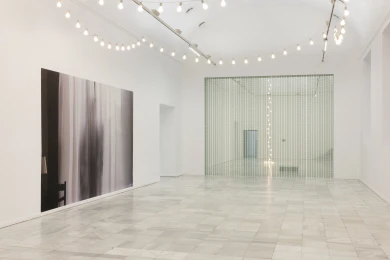
Dear Felix:
Saturdays at 6pm
The immediately recognisable art of Felix Gonzalez-Torres, which is on display, from May to October 2026, in the show Sweet Revenge, moves beyond the transmission of messages laden with poetic evocation, vital or biographical reflection, or even a clear political or ethical positioning. Rather, it seeks an active response by visitors to the exhibition. His work invites engagement with these messages so that, whether delighting, moving or challenging, it still prompts viewers to participate in the dialogue and complete the artistic undertaking with their own actions.
Thus, the guided tour Dear Felix: offers a shared, dialogue-inflected tour through the show, with the aim of collectively thinking and feeling the gestures the artist’s work puts forward. Ostensibly simple actions such as crossing through a beaded curtain to take a sweet and eat it, taking a poster from a stack of paper or simply observing a billboard closely, all contain ways of understanding life, loss, love, injustice or the passing — never linear — of time. The tour’s ultimate aim is not to set meanings or create an overload of interpretations of the work, nor does it seek to crystallise an image of the artist and his life in a response to questions which are not there. It looks instead to provide a space to open shared meaning in these apparently simple objects and to attempt a possible correspondence of return from the here and now. A lumbering attempt at responding which starts with a simple Dear Felix:
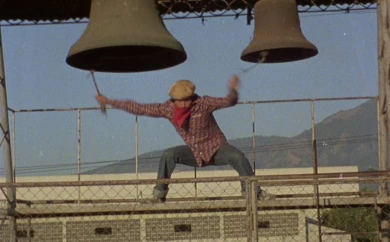
Files of Tropical Revolutions
Sábado 20 y 27 de junio, 2026 - 19:00 H
The Reframing Banana Imagery series concludes with two works that condense the height and twilight of this period in history, epic sagas that cross borders and registers to embody experiences of armed struggle in the region. Cameras mix with firearms, borders between nations blur and patience reaches breaking point. This is where the tipping point lies, where the bloodshed weighs heavy and the murmurings of regional brotherhood are buried in the ground again.
Pan y dignidad (Carta abierta de Nicaragua) [Bread and Dignity (An Open Letter to Nicaragua)] recounts the historical records and process of national reconstruction in Nicaragua via the Sandinista popular uprising. Historias prohibidas de Pulgarcito (Forbidden Tales of Tom Thumb) places the camera at the heart of the El Salvador revolutionary struggle, interspersing testimonies of daily violence with the verses of the poet Roque Dalton.
Both works understand the armed revolution as an open file under construction. The insurgent brotherhood, although dissolved, still resounds in regional history.
Circling Over Exploited Bodies
Friday, 19 and 26 June 2026 - 7pm
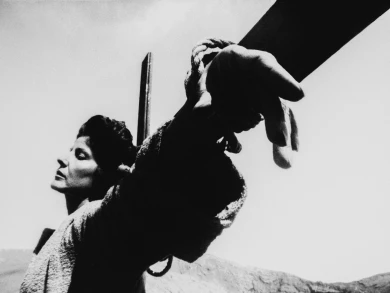
When forms of violence are inflicted on society, film responds from urgency. Images become abstract, sounds fade and the register of dissidence comes from the gut. La zona intertidal (The Intertidal Zone) is an essayistic and poetic approach to the repression of teachers in El Salvador in the 1970s — a teacher studies the biodiversity of the El Salvador coast as a boy finds a body on the same beach. A propósito de la mujer (About Women) interweaves testimonies of misery and rage towards patriarchal structures with fictional scenes of a symbolic procession through a harsh desert.
Both films understand the body as a target of violence and a territory of insurrection, a space where the blood shed by militancy and the patriarchal yoke turn pain into denouncement and existence outside the status quo into an act of political dissidence.
Robert Capa
Friday, 26 June 2026 – 6pm
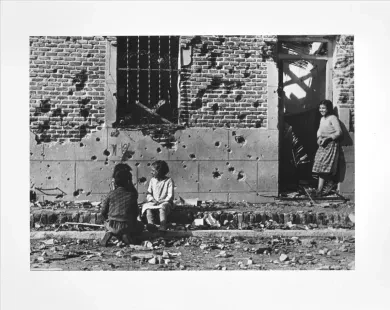
This international encounter centred on the figure of Robert Capa (Budapest, 1913 — Thai Binh, Vietnam, 1954), one of photojournalism’s pre-eminent figures, is held within the framework of the government initiative Spain and Freedom. Fifty Years and in conjunction with a cluster of three locations — the building on number 10 Calle Peironcely, the Plaza del Fotógrafo Robert Capa and the San Carlos Borromeo Parish in Vallecas — declared as a Place of Democratic Memory.
The emblematic photo Robert Capa took in 1936 of this area of Republican Madrid, featuring anonymous children talking in front of a bullet-riddled building attacked by Nazi-fascist air forces, has, in recent years, become a catalyst for impassioned collective action vindicating memory and denouncing the horrors and brutality of wars, past and present.
Within this context, representatives from cultural and academic spheres and civil society organisations from Germany, the USA and Spain discuss the legacy of Capa and photojournalism in European democratic memory, exploring in greater depth two citizen initiatives constructed by Europe from its shared memory: #SalvaPeironcely10 (#SavePeironcely10), in Entrevías (Puente de Vallecas), and the Capa Haus Initiative in the Lindenau neighbourhood of Leipzig, both united by the protection and conservation of historical heritage and by the defence of peace.
The round-table discussion features the participation of Cynthia Young, Juan Miguel Sánchez Vigil, Ulf-Dietrich Brumann and José María Uría Fernández and is moderated by Myriam Soto Lucas. Carmina Gustrán Loscos, the commissioner of Spain and Freedom. Fifty Years, will also join the discussion.
Inclusive Policies and Practices
19, 20 JUN 2026
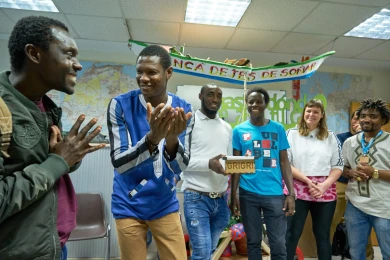
In conjunction with World Refugee Day, which takes place on 20 June 2026, Museo Situado and GRIGRI jointly organise this international encounter to foster the discussions, debates and exchange of practices which uphold solidarity with migrant people in European Union countries.
The programme, conceived as a space of exchange and the collective construction of knowledge, comprises a workshop of collaborative creation, discussions, a community meal and a film forum — activities designed by a local committee made up of young people under the age of thirty from different territories in Europe. The policy recommendations on welcoming people with migrant backgrounds and hospitality in urban contexts that arise from this encounter will be presented in Brussels at the end of 2026.
These sessions are developed within the context of the European cooperation project Bridging Borders and are framed inside the tenth anniversary of the GRIGRI Pixel project.