-
Anthony Vidler. Towards Superarchitettura
In collaboration with Aldo van Eyck and later with lyricists and situationists, Constant worked for a number years imagining architecture and urbanism that would respond to the physical and functional needs of the environment, based on the gypsy camps and migrant communities in post-industrial society. New Babylon remains an intense humanist experiment between a broad group of visionary projects by artists and architects involved in the revolt against alienating and monotonous environments in post-war reconstruction. Some these projects were utopian, for instance Nicolas Schöffer’s Cybernetic City, Mobile Architecture by Yona Friedman, the Mobile City by Iannis Xenakis and Archigram’s Plug-in City; while others were dystopian, such as Archizoom’s No-Stop City, or the Continuous Monument by Superstudio. Some, however, were part of the call by critic Reyner Banham to “invent ‘other’ architecture”. Today we can see the impact of these visions on divergent architects like Rem Koolhaas, Bernard Tschumi and Leon Krier, yet no contemporary architect has opened up a space quite like Constant’s.
-
José Miguel de Prada Poole, José Pérez de Lama, Izaskun Chinchilla and Ethel Baraona. Another City for Another Life
New Babylon responded to the pressing need to find urgent answers to mass and global urban growth, in addition to tackling the logic of alignment and privatisation in the contemporary city. This round-table discussion, which takes its title from a text by Constant, brings together four architects that have addressed these challenges in different ways: José Miguel de Prada Poole, through the city that instantly took shape in the ephemeral mega-structures of leisure in the 1968 environment; José Pérez de Lama, with the overflow of architecture into the convergence of digital technology, new social movements and urban territory; and Izaskun Chinchilla’s concept of organic prototypes and mechanisms conceived through play and participation. The table will be moderated by editor and critic Ethel Baraona.
![Constant. New Babylon Nord [Nueva Babilonia norte], (detalle). Plano, 1958 © Constant, VEGAP, Madrid, 2016](https://recursos.museoreinasofia.es/styles/small_landscape/public/Actividades/babylon.jpg.webp)
Held on 17 Feb 2016
New Babylon (1956–1974) is a networked city project conceived by the Dutch artist and architect Constant Nieuwenhuys for the “total fulfilment of life”, an approach to urbanism based on the freedom of the individual through the power of play and creativity. This activity, which marks the end of the retrospective in the Museo devoted to Constant, examines this total artwork’s place in the utopian urbanism that followed World War Two through a lecture by Anthony Vidler and a round-table discussion featuring participation from José Miguel de Prada Poole, Izaskun Chinchilla, José Pérez de Lama and Ethel Baraona.
In the lapse of almost half a century since this last great utopia of European art – outlined by Constant in maquettes, photomontages, planimeters and films - numerous questions still arise, and aim to be addressed in this activity: Where is Constant’s place in the post-war urbanism related to contemporary proposals such as those from the Independent Group, Yona Friedman and Le Corbusier, among others? What is the flipside today, and how can it keep up its ability to break ground in an age when technological networks are paradoxically inseparable from the more sophisticated forms of control and nomadism is associated with uncertainty as a class condition?
In collaboration with
The Netherlands Embassy, COAM and Fundación COAM
Organised by
Museo Reina Sofía
In collaboration with

Participants
Ethel Baraona. Editor, critic and curator. Together with César Reyes, she is the co-founder of dpr-barcelona, a research studio and independent publishers, and editor of Quaderns d’arquitectura i urbanisme.
Izaskun Chinchilla. Architect. Since 2001 she has directed her own studio, Izaskun Chinchilla Arquitectos, and her work has received awards at various international conferences and competitions. In 2014 she won the competition City of Dreams for her pavilion design in Governors Island (New York), which used recycled material and was built collectively. She is also a professor and researcher at Bartlett School (University College London).
José Pérez de Lama. Architect and professor at the Higher Technical School of Architecture at the University of Seville. Between 2001 and 2011 he was part of the group hackitectura.net (together with Sergio Moreno and Pablo de Soto). He has published and edited Devenires ciborg. Arquitectura, Urbanismo y Redes de Comunicación (2006), WikiPlaza. Request For Comments (2011) and Yes We Are Open! Fabricación digital, tecnologías y cultura libres (2014).
José Miguel de Prada Poole. Architect and professor of Architectural Design, Industrial Design for Housing and Emergency Architecture at ETSAM (the Polytechnic University of Madrid). In 1975 he won the National Architecture award, and was also a researcher at the Center for Advanced Visual Studies and visiting professor at the MIT in Cambridge (Massachusetts, USA) between 1980 and 1982. In 1968 he devised the Ciudad instantánea (Instant City) in Ibiza and in 1972 the space for the Pamplona Encounters.
Anthony Vidler. Architectural historian and theorist. He is dean and professor at the Irwin S. Chanin School of Architecture (2002–2012), and visiting professor at Yale and Princeton Universities, among numerous others. His publications include Histories of the Immediate Present: Inventing Architectural Modernism (2011), Architecture between Spectacle and Use (2008), Warped Space: Art, Architecture, and Anxiety in Modern Culture (2000), The Architectural Uncanny: Essays in the Modern Unhomely (1992) and The Writing of the Walls. Architectural Theory in the Late Enlightenment (Princeton: Princeton Architectural Press, 1987).


Más actividades
Files of Tropical Revolutions
Sábado 20 y 27 de junio, 2026 - 19:00 H
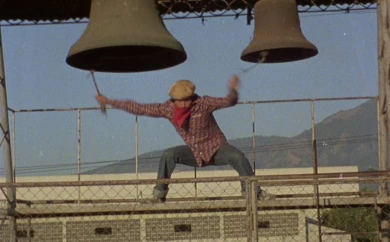
The Reframing Banana Imagery series concludes with two works that condense the height and twilight of this period in history, epic sagas that cross borders and registers to embody experiences of armed struggle in the region. Cameras mix with firearms, borders between nations blur and patience reaches breaking point. This is where the tipping point lies, where the bloodshed weighs heavy and the murmurings of regional brotherhood are buried in the ground again.
Pan y dignidad (Carta abierta de Nicaragua) [Bread and Dignity (An Open Letter to Nicaragua)] recounts the historical records and process of national reconstruction in Nicaragua via the Sandinista popular uprising. Historias prohibidas de Pulgarcito (Forbidden Tales of Tom Thumb) places the camera at the heart of the El Salvador revolutionary struggle, interspersing testimonies of daily violence with the verses of the poet Roque Dalton.
Both works understand the armed revolution as an open file under construction. The insurgent brotherhood, although dissolved, still resounds in regional history.
Circling Over Exploited Bodies
Friday, 19 and 26 June 2026 - 7pm
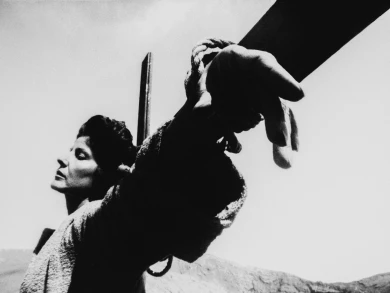
When forms of violence are inflicted on society, film responds from urgency. Images become abstract, sounds fade and the register of dissidence comes from the gut. La zona intertidal (The Intertidal Zone) is an essayistic and poetic approach to the repression of teachers in El Salvador in the 1970s — a teacher studies the biodiversity of the El Salvador coast as a boy finds a body on the same beach. A propósito de la mujer (About Women) interweaves testimonies of misery and rage towards patriarchal structures with fictional scenes of a symbolic procession through a harsh desert.
Both films understand the body as a target of violence and a territory of insurrection, a space where the blood shed by militancy and the patriarchal yoke turn pain into denouncement and existence outside the status quo into an act of political dissidence.
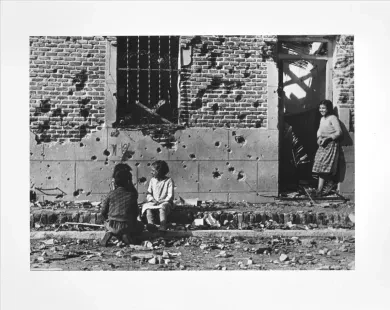
Robert Capa
Friday, 26 June 2026 – 6pm
This international encounter centred on the figure of Robert Capa (Budapest, 1913 — Thai Binh, Vietnam, 1954), one of photojournalism’s pre-eminent figures, is held within the framework of the government initiative Spain and Freedom. Fifty Years and in conjunction with a cluster of three locations — the building on number 10 Calle Peironcely, the Plaza del Fotógrafo Robert Capa and the San Carlos Borromeo Parish in Vallecas — declared as a Place of Democratic Memory.
The emblematic photo Robert Capa took in 1936 of this area of Republican Madrid, featuring anonymous children talking in front of a bullet-riddled building attacked by Nazi-fascist air forces, has, in recent years, become a catalyst for impassioned collective action vindicating memory and denouncing the horrors and brutality of wars, past and present.
Within this context, representatives from cultural and academic spheres and civil society organisations from Germany, the USA and Spain discuss the legacy of Capa and photojournalism in European democratic memory, exploring in greater depth two citizen initiatives constructed by Europe from its shared memory: #SalvaPeironcely10 (#SavePeironcely10), in Entrevías (Puente de Vallecas), and the Capa Haus Initiative in the Lindenau neighbourhood of Leipzig, both united by the protection and conservation of historical heritage and by the defence of peace.
The round-table discussion features the participation of Cynthia Young, Juan Miguel Sánchez Vigil, Ulf-Dietrich Brumann and José María Uría Fernández and is moderated by Myriam Soto Lucas. Carmina Gustrán Loscos, the commissioner of Spain and Freedom. Fifty Years, will also join the discussion.
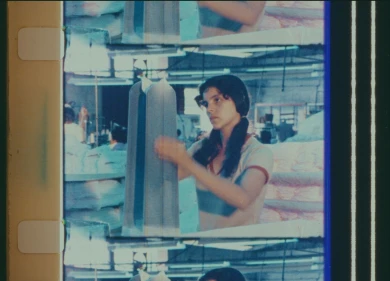
Central American Designation of Origin
Thursday, 18 and 25 June 2026 - 7pm
Fertile lands, farmers’ hands, rural faces. This first programme in the series Reframing Banana Imagery understands the foundations of the Central American experience from exploitation, extractivism and displacement, and from the organisation and resistance that emerged as a reaction. The four films within extend from a lyrical documentary on farmers’ solidarity to the playful subversion of the institutional format of the United Fruit Company.
Bananeras (Banana Growers) is a combative portrait of the inhumane conditions of the American banana plantations located in Nicaragua through much of the twentieth century. Costa Rica Banana Republic is a perspicacious satire via an institutional documentary of banana production, spotlighting the extractive nature of this agro-exporting model in the 1970s. Organización Campesina (Farmers’ Organisation) frames rural resistance in Honduras from a direct depiction and lyrical documentary, while Dos veces mujer (Two Times a Woman) dissects the invisibility of the double-shift working day Central American women farmers endure: working in the countryside and working in the home. As a whole, the works here present the earth at once as a wounded body and a space of dignity.
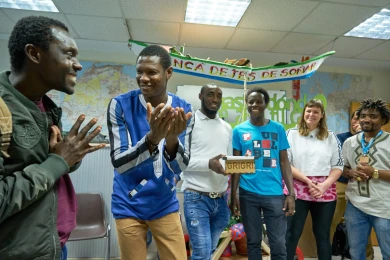
Inclusive Policies and Practices
19, 20 JUN 2026
In conjunction with World Refugee Day, which takes place on 20 June 2026, Museo Situado and GRIGRI jointly organise this international encounter to foster the discussions, debates and exchange of practices which uphold solidarity with migrant people in European Union countries.
The programme, conceived as a space of exchange and the collective construction of knowledge, comprises a workshop of collaborative creation, discussions, a community meal and a film forum — activities designed by a local committee made up of young people under the age of thirty from different territories in Europe. The policy recommendations on welcoming people with migrant backgrounds and hospitality in urban contexts that arise from this encounter will be presented in Brussels at the end of 2026.
These sessions are developed within the context of the European cooperation project Bridging Borders and are framed inside the tenth anniversary of the GRIGRI Pixel project.