-
27 February, 2014 Nouvel building, Auditorium 400
Opening Session
7:00 - 7:30 p.m. Introduction by Manuel Borja-Villel, Zdenka Badovinac and Bartomeu Marí
7:30 - 8:30 p.m. Conversation with Jesús Carrillo, Antonio Negri, and Raúl Sánchez CedilloThe invited speakers will talk about the functions of Europe in the artistic and political imagination of the 21st century, following one hundred years of exhaustion of colonial Europe and the idea of nation-states. Europe is viewed as a tragedy of brotherhood and anti-fascism, as well as a constant strife for political and institutional creations, quite distant from the images of the people passed down to us from Romanticism.
Participants:
Zdenka Badovinac. Director of Moderna Galerija in Ljubljana (Slovenia) since 1993. Curator and art historian. Founding and executive member of the European museum network L’Internationale.
Manuel Borja-Villel. Director of Museo Reina Sofía since 2008. He has also been the director of Fundació Tàpies (1990-1998) and of MACBA (1998-2007). Executive member of the European museum network L´Internationale.
Bartomeu Marí. Director of MACBA since 2008, he has also been the director of Witte de With, Rotterdam (1996-2001). Executive member of the European museum network L´Internationale.
Antonio Negri. post-operaist philosopher and thinker, co-author, with Michael Hardt, of Empire (2002), Multitude: War and Democracy in the Age of Empire (2004) and Commonwealth (2011) and Declaration (2013).
Raúl Sánchez Cedillo. Translator and editor of books by authors such as Toni Negri and Felix Guattari. Since the 1990s he has been involved in various political networks and research groups in post-operaist circles. He is part of Universidad Nómada and of the Fundación de los Comunes.
-
28 February, 2014 Nouvel building, Auditorium 400
Session 1
Round table 1. Organising in times of institutional crisis. Dialogue between Antonio Negri, Valery Alzaga and Ada Colau. Moderated by Raúl Sánchez Cedillo
The austerity policies put in place by European governments through the Troika have turned a financial crisis into a project bent on the destruction of social and workers’ rights, and they have established a regime of infinite debt on individuals and institutions. But new political and institutional creations are demonstrating that debt and democracy based on citizen participation and on social rights are incompatible. In these creations we get a glimpse of prototypes of a Europe made from the bottom up, out of the sense of brotherhood of the social struggles and self-organisation by citizens.
Round table 2. New democracies and forms of the commons. Dialogue between Isabell Lorey, Montserrat Galcerán and Marina Garcés. Moderated by Raúl Sánchez Cedillo.
The ideal of social and political citizenship in Europe has never been more than a distant aspiration, constantly belied by the facts. While in effect, it was dominated by a white, male, industrial, national and state-oriented figure. And with the hegemony of the neoliberal paradigm, even the collective reference associated with the working class and union movements has disappeared. The “government of the precarious” is imbued with individualism and the abandonment of collective solidarities. However, the practices of the commons, both those linked to the “natural commons” (water, land, renewable energies) and those linked to the “artificial commons” (knowledge, care-giving, networks) enable us to imagine a Europe united by new institutions of the commons, born out of cooperation and care-giving between precarious lives that have taken the form of a challenge.
Participants:
Valery Alzaga. Chicana union organiser and migrant rights activist. She has also worked as a union
co-ordinator in Europe and Africa. She is researching the development of new forms of
bio-unionism and emotional organisation.Ada Colau. Activist and spokesperson of PAH (Platform for Mortgage Victims). She has been involved in numerous social movements since 2001. She is the co-author, along with Adriá Alemany, of the book Vidas hipotecadas. De la burbuja inmobiliaria al derecho a la vivienda (2012).
Montserrat Galcerán. Professor of philosophy at Universidad Complutense de Madrid. Social activist and writer, she is the author of Innovación tecnológica y sociedad de masas (1997) and Deseo (y) libertad. Presupuestos de la acción colectiva (2009).
Marina Garcés. Professor of philosophy at the University of Zaragoza and consultant at Universitat Oberta de Catalunya. Since 2002 she has been promoting and coordinating the collective project Espai en Blanc, which works towards an engaged, practical and experimental relationship with philosophical thought. She is the author of Un mundo común (2013) and En las prisiones de lo posible (2012).
Isabell Lorey. Visiting professor of political theory at the Centre for Gender Studies at the University of Basel. She conducts research about the precarization of work and life in neoliberal society, social movements, democracy and representation. She is part of the collective kpD -kleines postfordistisches Drama- and she has published, among other works, Governmentality and self-precarization (2006) and Occupy! Die aktuellen Kämpfe um die Besetzung des Politischen (2012).
Antonio Negri. Post-operaist philosopher and thinker, co-author, with Michael Hardt, of Empire (2002), Multitude: War and Democracy in the Age of Empire (2004) and Commonwealth. (2011) and Declaration (2013).
Raúl Sánchez Cedillo. Translator and editor of books by authors such as Toni Negri and Felix Guattari. Since the 1990s he has been involved in various political networks and research groups in post-operaist circles. He is part of Universidad Nómada and of the Fundación de los Comunes.
-
1 March, 2014 Nouvel building, Auditorium 400
Session 2
Round table 3. Europe as a province. Dialogue between Ranabir Samaddar, Sandro Mezzadra and Jesús Carrillo. Moderated by Francesco Salvini
The ambiguity of the European project can be seen in its very history. The antifascist brotherhood of the “founding fathers” never questioned the colonial and imperialist reality of the founding nations. The return of the repressed lives in the peripheries of European cities, as the post-colonial reality; banlieue, internal borders and the political exclusion of millions of people. At the same time, the convulsions of the globalisation process all over the world put the continent in a provincial position, i.e. no longer central. The end of the colonial legacy of the European nations is considered a condition for democratic emancipation on the continent.
Round table 4. For a new social contract on culture. Dialogue between Bojana Piskur and Hilary Wainwright. Moderated by Yaiza Hernández
Culture, which was one of the pillars of the ideological reconstruction of Europe after the war, has seen its enlightened foundations slowly erode as a result of its enclosure in the market and in art institutions, and because of its distance from society’s conflicts and contemporary subjectification processes. What would be the basic elements of this new contract that would put culture at the centre of social emancipation processes?
Participants:
Jesús Carrillo. Head of Cultural Programs at Museo Reina Sofía and professor of art history at Universidad Autónoma de Madrid.
Yaiza Hernández. Lecturer in the MRes Art at Central Saint Martins (London) and a PhD candidate at the Centre for Research in Modern European Philosophy. Until 2012, she was Head of Public Programmes at MACBA, before that, she worked as director of CENDEAC (Murcia) and curator at CAAM (Las Palmas). She have recently published Inter/Multi/Cross/Trans. (Montehermoso, 2011). She is currently preparing Repressive Tolerance, and General Theory.
Sandro Mezzadra. Professor of contemporary political theory and post-colonial studies at the University of Bologna. He is co-director of the magazine DeriveApprodi, a member of the editorial collective Studi Culturali and he also contributes to the newspaper Il Manifesto. He has published The Right to Escape. Migration, citizenship and globalization (2004) and La condizione postcoloniale. Storia e politica nel mondo globale (2008), among other works.
Bojana Piskur. Art historian, curator at the Moderna Galerija of Ljubljana and a founding member of the group Radical Education.
Francesco Salvini. Sociologist and researcher at Queen Mary University, he also forms part of the social centre Exit-Raval and of Universidad Nómada.
Ranabir Samaddar. Director of the Calcutta Research Group. He has studied the issue of human rights in the conflicts of south Asia. He has published The Politics of Dialogue (2004), Emergence of the Political Subject (2009) and The Nation Form (2012).
Hilary Wainwright. Feminist sociologist and activist, she is a researcher at the Transnational Institute and at the International Centre for Participation Studies (ICPS). She is the editor of the British magazine Red Pepper.
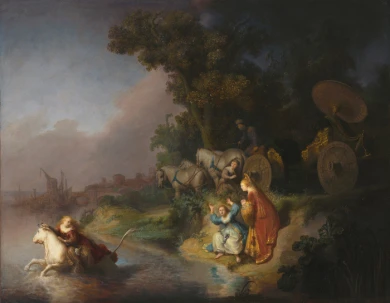
The new abduction of Europe: debt, war, democratic revolutions
Held on 27 Feb 2014
Organised within the framework of The Uses of Art, a project by the European museum network L´Internationale, this event reflects on the formation of new cultural and political agents as a result of the insufficiency of the institutional structures that have articulated the European project up to now. Structured into workshops and round tables, the event seeks to pave the way for a renewed social pact between institutions and civil society.
The reasons that the institutional structures have proven insufficient are various and complex. On the one hand, the fall of the Berlin Wall and the end of the Cold War, which reduced the need for a united Europe as anti-Soviet as it had originally been anti-Fascist. Another factor was the primarily economic slant of the EU process in the 1990s, which neglected the cultural and political foundations that would make the European project capable of responding to the processes of democratic agency in a society in continuous transformation.
A new “abduction of Europe” has occurred but this time it is not the crafty Zeus who, charmed by the Phoenician woman named Europa, abducts her in order to offer her the pleasure and glory of the Greek kingdom. Instead, it is financial logic that abducts her, and at a very high price: the very identity of Europe as the potential for change and for democratic emancipation. Spurred by this dramatic urgency, the encounter intends to help lay the foundations of a radically new form of political and cultural agency. Aware of the changes occurring in the world system and of the end of liberal public sphere, The new abduction of Europe seeks the emergence of new actors arising from collective intelligence and the transformation of museums and cultural institutions in recognition.
Despite an almost existential precariousness, it is the world of art and of the new cognitive work movements that have most theorised and practiced a different Europe, conceiving of it as a space in which to imagine a new critical and common process. An expectation which, in the framework of L’Internationale –a museum network based on horizontality between institutions and also between institutions and society– tries to define a common vocabulary, so as to bolster a unifying project that breaks through the border between debate and action and that, in short, thinks about the potential and accumulation of culture in times of austerity and scarcity.
The event will have two round tables, with important European thinkers, which will be open to the public and also streamed live. At both debates there will be active moderation and a direct dialogue with members of the audience, those present physically and those participating through the social networks. The two tables will examine the most pressing questions related to Europe’s present.
Organised by
L’internationale, European network of museums, and Fundación de los Comunes within the framework of The Uses of Art

Más actividades
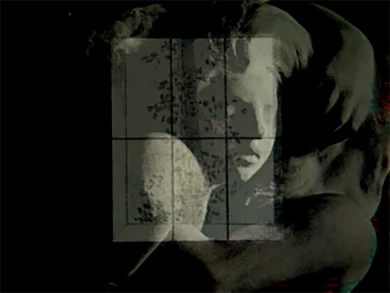
Godard and Miéville: Time and Ruin
Friday, 18 September 2026 - 7pm
Inside the framework of the conference On Your Screen: Art History and the Museum Facing the Audiovisual Challenge, this film series sets forth three critical visions of the museum via three sessions featuring the works of John Berger, Jean-Luc Godard and Anne-Marie Miéville, Ariella Azoulay, Alan Resnais and Chris Marker, Kwate Nee-Owoo, and the premiere of short films by Isabel Coixet and La Vulcanizadora (Maria Rojas Arias and Andrés Jurado). In classical theory, the museum gives the world meaning; it contains fragments of the past, granting them a history, a narrative that explains preterite time and the present. Today, there is an implicit assumption that this function hides and legitimises forms of power, yet what if the museum, instead of explaining the world, multiplied it through radical ideas, silenced periods and repressed subjects? Such is the approach of the film-makers and artists in this film season.
In 1972 the writer John Berger opened the landmark television series Ways of Seeing with an iconoclastic gesture: slicing Sandro Botticelli’s painting Venus and Mars (1485) in London’s National Gallery. A transgressive act that recalls contemporary attacks on the museum by dissident youth and with which Berger, after revealing it was a reproduction, sought to ignite debate around the idea of an original artwork and a copy. In this, the hundredth anniversary of his birth, the first session pays homage to one of the great art writers of the twentieth century. Starting with a review of Berger’s audiovisual work by art historians Alberto López Cuenca and Modesta Di Paola, the series begins with the premiere of 100 Years and You Everywhere (2026), an unreleased short film by Isabel Coixet composed as a beautifully crafted letter to Berger, and continues with an analysis of fragments of Ways of Seeing in relation to the museum and contemporary art.
The second session screens two medium-length films by Jean-Luc Godard and Anne-Marie Miéville on time, ruin and museum. In The Old Place. Small Notes Regarding the Arts at Fall of 20th Century (1999), both film-makers consider what remains of that “old place”, the museum, at the close of a century of wars and totalitarianism, and ask whether it should be more of a legend or desire than a place. This same driving principle leads Godard to build his own imaginary museum in Reportage amateur (maquette expo) (2006), a rickety toy museum which, paradoxically, contains the great film-maker’s full power of thought on history and images.
Finally, the third session explores one of the major challenges of recent years: the decolonisation of the museum, the recognition of its link to imperialist discourses of power and the need to situate a new silenced or repressed subject at the centre of the Western narration of history. Under the title Museums and Restitution, it includes the film Undocumented. Unlearning Imperial Plunder (2019), by theorist Ariella Azoulay, Statues Also Die, by Alan Resnais and Chris Marker (1953), Kwate Nee-Owoo’s You Hide Me (1970) and the first screening of the short film Quinto verso, parte de Tonada (Fifth Verse, Part of Tonada), by La Vulcanizadora (Maria Rojas Arias and Andrés Jurado), filmed at the Museo de América in Madrid.
![Ariella Azoulay, Un-documented. Unlearning Imperial Plunder [Indocumentados. Desaprendiendo el saqueo imperial], 2019, película](https://recursos.museoreinasofia.es/styles/small_landscape/public/Actividades/5.diseminar-mundo.jpg.webp)
Museums and Restitution
Saturday, 19 September 2026 - 7pm
Centuries of plundering, decades of amnesia, years of living with unmitigated extractivist power… Does a museum, as we know it, have a raison d'être in a postcolonial society?
This session expounds the operations of the museum as a colonial machine, while putting forward ideas, in narration, for a more just, equal and inclusive institution of the future via society’s marginalised and minority voices. The session begins with the international premiere of Quinto verso, parte de Tonada (Fifth Verse, Part of Tonada), which presents a vision of the Quimbaya Collection (fifth and sixth centuries CE) from the Museo de América in Madrid. It is constructed with the voices and chants of Wayúu mourners and guides, not only as a way of reinstating the role of these gold idols — anthropomorphic figures of men and women used as vessels in ritual practices — but also to imagine that what must be exhibited is not the gold itself. It is the ritual’s own chant. In the classic film You Hide Me (1970), Ghanaian film-maker Kwate Nee-Owoo accesses the British Museum’s collection of African art, located in the building’s basement, to question the meaning behind a museum plundering and nullifying. A fine exercise of first-person institutional critique screened for the first time in Spain. Almost seventy years since Resnais and Marker made Statues Also Die (1953), a reflection on the aura-bearing value of the museum opposite the identity-based and cultural belonging of African art, theorist Ariella Azoulay films the same statues again at the Musée du Trocadéro (today the Musée du Quai Branly), which survive and wait to be reunited with their people. Azoulay, whose wholly original undertaking is a lesson to the museum of the future, connects the forced migration of these sculptures with the mass transit of people crossing borders artificially imposed by the same system that has plundered their culture.
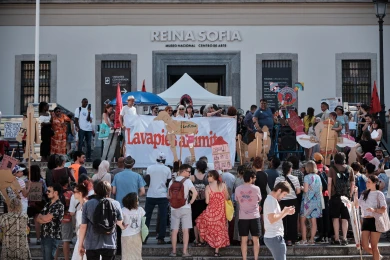
The School of Transformative Institutionalism and Local Organisation
From 21 to 24 September 2026
The School of Transformative Institutionalism and Local Organisation (S.T.I.L.O.) is a programme of joint learning and join strategy which sets in motion a process for the exchange of questions, methodologies and experiences between cultural organisations. The overall aim is to create, circulate and prototype tactics, tools and collective knowledge on institutional practices that open new channels for defending culture and advocating structural transformation in divergent geographical contexts.
The project is part of the Laboratorio de Institucionalidad Compartida (The Laboratory of Shared Institutionalism, LIC), a space for the Museo Reina Sofía’s research, work and advocacy centred on developing, experimenting with and systemising practices, protocols and tools which contribute to a fairer and more liveable cultural ecosystem.
For many years now, so-called infrastructural critique in museums questions material, legal and economic infrastructures, among others, as well as the forms of solidarity and practices required to sustain the cultural ecosystem. By approaching current debates, S.T.I.L.O. raises questions on the ways in which organisations define and interpret their practices, organise their relations and respond to the social contexts in which they operate.
The school gathers four cultural organisations that work via different institutional models – scale, contexts, conditions, different working models — with the goal of pooling common strategies and tools of organisation, advocacy and relationships with local communities.
The programme is conceived as a collaborative process with the participation of Arika, La Revuelta, BAK Basecamp and The Tentacular Museum (Museo Reina Sofía) and is structured around preparatory online sessions and an in-person seminar in Madrid.
S.T.I.L.O. is an activity framed inside the working strand of Situated Organisations from L'Internationale’s Museum of the Commons project, which reflects on the role of museums and art organisations as actors within complex social networks and ecosystems, with a view to exploring new ways to democratise institutions and make them more open, inclusive and useful.
![Eli Cortiñas, The Most Given of Givens [Lo más dado de lo dado], 2016, instalación de vídeo de tres canales.](https://recursos.museoreinasofia.es/styles/small_landscape/public/Actividades/charla-eli-corti%C3%B1as.png.webp)
Eli Cortiñas. The Machine Dreams of Smoke
Tuesday, 22 September 2026 at 7pm
In conjunction with the exhibition Eli Cortiñas. The Machine Dreams of Smoke, the Museo Reina Sofía organises a conversation between artist Eli Cortiñas (Las Palmas de Gran Canaria, 1979) and Amanda de la Garza, the Museo’s deputy artistic director, delving deeper into this new show unveiled in Espacio 1.
The conversation takes as its point of departure the recent incorporation into the Museo Reina Sofía Collections of the work The Most Given of Givens (2016), which Cortiñas revisits and expands upon in this exhibition to continue research undertaken more than a decade ago on the relationships between the history of film, the history of museums and contemporary technologies of image production. From a critical perspective, the artist analyses the way in which these devices participate in building imagery, knowledge and forms of power, and how they have historically contributed to producing otherness from a colonial logic.
Across the encounter, Cortiñas shares the research process and archive work underpinning the exhibition, touching on questions such as the construction of colonial imagery through film, the circulation and association of images and the persistence of certain regimes of representation in contemporary visual culture. Moreover, the conversation spotlights the intervention carried out in the hall of Espacio 1, where the museographic device, emptied cabinets and AI-generated images prolong these investigations to reflect on the contemporary mechanisms of production, classification and the transmission of knowledge.
The talk offers the audience the chance to gain first-hand insight into the key conceptual elements and creative process in The Machine Dreams of Smoke, as well as exploring the themes that run through Eli Cortiñas’s practice: the historical construction of the gaze, the persistence of colonial structures in visual culture and the apparent neutrality of technologies and algorithms which today mediate the production and circulation of images.
These inaugural conversations, part of the main working strands of the Museo’s Public Programmes Area, aim to explore in greater depth the exhibition narratives of the shows organised by the Museo from the perspective of artists, curators and specialists.
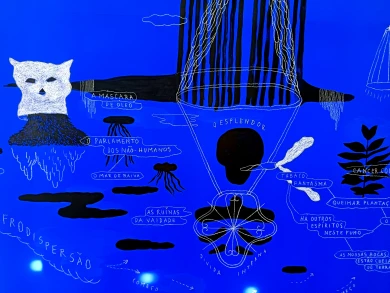
Olivier Marboeuf
Wednesday, 23 September, 2026 - 7pm
In this first public presentation of his annual research fellowship at Museo Reina Sofía, entitled The Rioter and the Witch: Rehearsals on Cultural and Para-Institucional Mediation, Olivier Marboeuf addresses the question that guides his research: how might we summon the emancipatory power of rioting and storytelling as tools for mediation and institutional transformation, without succumbing to the heritagisation, depoliticisation or commodification of the ways of life that are inherent to them?
Whilst introducing the questions that guide his research project at the Museum, this presentation explores some of the central notions that underpin his artistic and research practice, such as ‘witch mediation’, the construction and legitimisation of ‘interpretative communities’, and the creation of speculative cartographies and archives. The concepts coined by Marboeuf arise from a back-and-forth between theory and his sustained career as an artist, cultural organiser, community storyteller and film producer, always concerned with the conditions of presence, representation, autonomy and visibility of minority practices within the cultural institution.
By understanding mediation as a bewitched practice, Marboeuf proposes kindle this practice as a politics of collective hallucination which, by re-enacting the emancipatory potential of Caribbean storytelling, destabilises and negotiates who can appear, speak, interpret and narrate, and which stories become legible, without renouncing opacity. Hence, in his work, cartography emerges as a speculative methodology that does not rely on representation, but rather on the presence of a community that collectively interprets a plural and cacophonous narrative, one that is never transparent or definitive.