
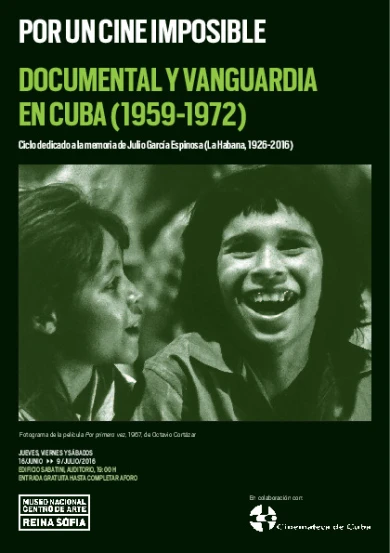
Programme
-
16 June 2016
Beginnings
With a presentation by art historian and the series’ curator Michael Chanan, who is also a professor at the University of Roehampton and author of The Cuban Image: Cinema and Cultural Politics in Cuba (1986), among other books.
Julio García Espinosa and Tomás Gutiérrez Alea
El Mégano, 1955
35mm, original version, b/w, 25’Julio García Espinosa
La Vivienda (Housing), 1959
35mm transferred to digital archive, original version, b/w, 21’Sexto aniversario (Sixth Anniversary), 1959
35mm transferred to digital archive, original version, b/w, 18’Tomás Gutiérrez Alea
Asamblea General (General Assembly), 1960
35mm transferred to digital archive, original version, b/w, 14’Santiago Álvarez
Noticiero 49 (News Bulletin 49), 1961
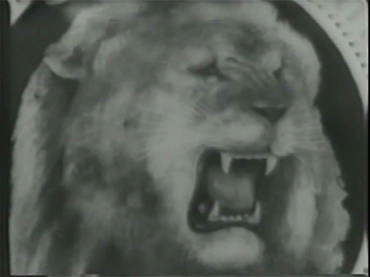
35mm transferred to digital archive, original version, b/w, 9’This first session sets out to shine a light on the origins of the visual model of documentary-making in Cuba. El Mégano, a precursor to ICAIC (The Cuban Institute of Cinematic Art and Industry), decries the poor conditions of coal workers in the Ciénaga de Zapata region, starting from a neo-realist reconstruction. La Vivienda deals with urban reform, while Sexto aniversario takes its title from the sixth anniversary of the attack on Cuartel Moncada on 26 July 1953. Tomás Gutiérrez Alea’s Asamblea general foregrounds, from the principles of the English school of Free Cinema, the mass gathering in the proclamation of the First Declaration of Havana. Noticiero 49, by Santiago Álvarez, explores a Czech Film Festival held in Havana, the premiere of a film on Cuba made by veteran Soviet documentary film-maker Roman Karmen, and the ICAIC’s nationalisation of North American film distributors, whose copies were a film-image archive and laboratory which could be freely drawn from.
-
17 June 2016
Battles
Joris Ivens
Cuba, pueblo armado (Cuba, A People Armed), 1961
35mm, original version, b/w, 35’Manuel Octavio Gómez
Historia de una batalla (History of a Battle), 1962
35mm, original version, b/w, 39’Santiago Álvarez
Ciclón (Cyclone), 1963
35mm, original version, b/w, 22’Now, 1965
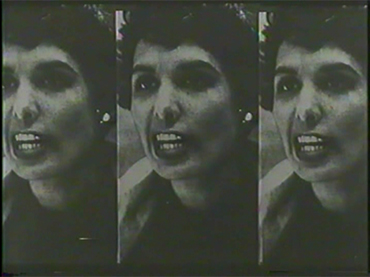
35mm, original version, b/w, 6’ICAIC invited foreign film-makers who were supporters of the Revolution to take up work residencies, resulting in an exchange between the international avant-garde and fledgling Cuban film-makers. A distinguished figure in this context was Joris Ivens, whose decision to film the People’s Militia as opposed to the Rebel Army was grounded in wanting to depict the eminently popular nature of the Revolution. The military confrontation in Manuel Octavio Gómez’s Historia de una batalla is the literacy campaign of 1961 — the film combines mass demonstrations, Che Guevara at the UN and the events at Playa Girón as an example of the game of social and political forces framing the education campaign. Santiago Álvarez’s Ciclón is a cinematic news programme on the progress of a devastating hurricane on the island and ensuing rescue operations. Combining sequences shot simultaneously withnumerous cameras located in different places, Álvarez begins in this film to move beyond the traditional format of the film newscast. Now, meanwhile, is an homage to the Civil Rights movement in the USA and an editing tour de force for its use of found footage to create a mise en scène of a banned protest song, performed by jazz singer Lena Horne.
-
18 June 2016
Women
With a presentation by Josetxo Cerdán, a film historian and lecturer at Carlos III University in Madrid, as well as director of the Punto de Vista International Documentary Film Festivalfrom 2010 to 2013.
Agnès Varda
Salut les Cubains, 1962
35mm, original version with Spanish subtitles, b/w, 28’Theodor Christensen
Ella (Her), 1964
35mm, Cuba, original version, b/w, 35’Sara Gómez
Iré a Santiago (I’m Going to Santiago), 1964
35mm, original version, b/w, 15’Y tenemos sabor (And We’ve Got Flavour) 1967
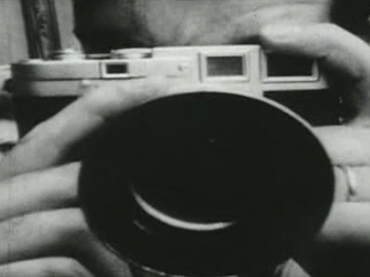
35mm, original version, b/w, 30’Agnès Varda’s Salut les cubains is a subjective film put together with snapshots selected fromthousands of photographs the film-maker took on her visit to Cuba in 1962 and 1963, combined with Cuban music and voice-overs. Varda defined the film as “socialism andchachachá”. Ella, made by veteran Danish film director Theodor Christensen, is the firstICAIC-produced film to deal with women’s position in the framework of the Revolution. Sara Gómez, a salient representative of Black intellectualism, was the first woman film-maker to make her mark on Cuban cinema. Iré a Santiago is a trip, in the stylistic vein of the Free Cinema school, to a place where “mixed-race is a mood”. Y tenemos sabor is a journeythrough the exotic range of percussion instruments used in Cuban music and their origins: claves, spoons, maracas, bongos, güiros (made from pumpkins), cowbells and horse jawbones. Gómez was a trained musician and her syncopated editing conveys the criss-crossed rhythms of the music, serving as a counterpoint.
-
23 June 2016
Third World
Sara Gómez
Una isla para Miguel (An Island for Miguel), 1968
35mm transferred to digital archive, original version, b/w, 22’Julio García Espinosa
Tercer mundo, Tercera Guerra Mundial (Third World, Third World War), 1970
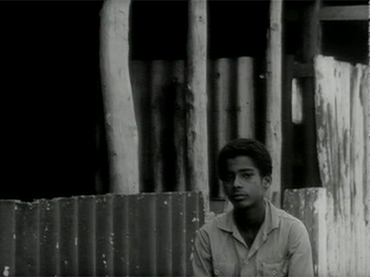
35mm transferred to digital archive, original version, b/w, 90’Una isla para Miguel, by Sara Gómez, is the second part of a trilogy the director devoted to the Isla de Pinos and a compassionate study of a young man from a single-parent family who has been sent to a re-education camp. The film’s frankness breaks from orthodox frameworks, showing a complex approach to social marginalisation. Tercer mundo, Tercera Guerra Mundial reflects the opinion of its director, Julio García Espinosa, who believed it is“impossible to question a certain reality without first questioning the genre you choose to show it with”. The film is at once educational and self-aware and is made up of a whole series of documentary resources, techniques and styles. Filmed in North Vietnam, it begins as a political documentary, before progressively leaving behind conventions of genre: after a historical narration, the silent testimonies of ordinary people make way for a travel itinerary through destruction, with the intervention and direct filming of the Vietnamese. A bona fide paradigm of imperfect cinema.
-
24 June 2016
Perspectives I
Néstor Almendros
Gente en la playa (People at the Beach), 1961
16mm transferred to digital archive, original version, b/w, 10’Pastor Vega
Hombres del cañaveral (Men of the Sugar Plantation), 1965
35mm, original version, b/w, 10’José Massip
Guantánamo, 1967
35mm, original version, b/w, 62’Madina-Boe, 1968
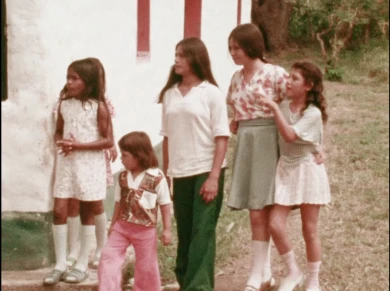
35mm transferred to digital archive, original version, b/w, 38’This session shows, in a series conceived in three parts, the growing variety of themes and an evolving gaze in this documentary movement. Néstor Almendros’s Gente en la playa is theFree Cinema school in its purest state; with no voice-over and unsynchronised ambient sound, the film is a spontaneous portrait of families doing typical family things at the beach. The subtext is that the variegated mix of black, white and mixed-race people would not have been possible prior to the Revolution, when people of colour had restricted access to the island’s beaches. Hombres del cañaveral, by Pastor Vega, is a simple day in the life of a brigade of voluntary workers from urban areas harvesting sugar cane — the film conveys an ideological debate on the moral qualities of work in a revolutionary society, yet without showing any trace of the blatant propaganda of the political pamphlet. The session concludes with two films by José Massip. Guantánamo shows the US naval base filmed from the point of view of Cubans from a neighbouring city and is an example of the experimental movement in the mid-1960s; Madina-Boe represents another major facet of the Revolution’s ideology: solidarity with African liberation movements.
-
25 June 2016
Santiago Álvarez
Cerro Pelado, 1966
35mm transferred to digital archive, original version, b/w, 59’Hanói, martes 13 (Hanoi, Tuesday 13), 1967
35mm, original version, b/w, 38’Hasta la victoria siempre (Always Until Victory) 1967
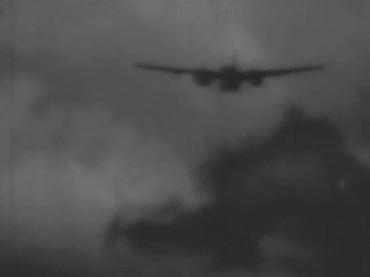
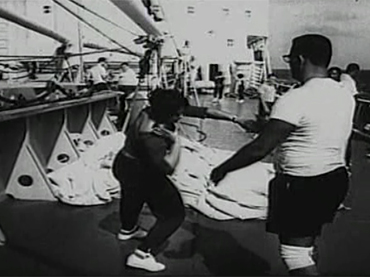
35mm, original version, b/w, 20’This next session screens three films by Santiago Álvarez, in which his signature editing, appropriation and satire take shape. Cerro Pelado takes its title from the name of a boat that transported Cuban athletes to take part in the tenth Central American and Caribbean Games, held in 1966 in San Juan, Puerto Rico. As it was a North American colony, the USA attempted to stop the Cuban delegation’s participation. A far-reaching reportage with fewvoice-overs and with one of Álvarez’s hallmarks: the use of music to biting satirical effect. Hanói, martes 13 was shot during the film-maker’s first trip to North Vietnam, in what is essentially a subtle, poetic anti-reportage which develops a structure of interruption and resumption to capture the experience of living in war. Hasta la victoria siempre is the epitome of urgent cinema and history at the same time. The film was made over forty-eight continuous hours in response to the traumatic news of Che Guevara’s death in Bolivia.
-
30 June, 2016
Cultural
With a presentation by Maria Luisa Ortega, art historian, a lecturer in Audiovisual Communication at the Autonomous University of Madrid, and the author of Cine directo. Reflexiones en torno a un concepto (2008) and numerous articles on the notion of “development” and experimental documentary-making in Cuba and Latin America.
Octavio Cortázar
Por primera vez (For the First Time), 1967
35mm, original version b/w, 10’José Massip
Nuestra Olimpiada en La Habana (Our Olympics in Havana), 1968
35mm, original version b/w, 19’Sara Gómez
En la otra isla (On the Other Island), 1968
35mm, original version b/w, 41’Octavio Cortázar
Acerca de un personaje que unos llaman San Lázaro y otros llaman Babalú (Concerning Another Character Some Call Saint Lazarus and Others Babalú), 1968
35mm, original version b/w, 20’Hablando del punto Cubano (Talking About Punto Cubano), 1972
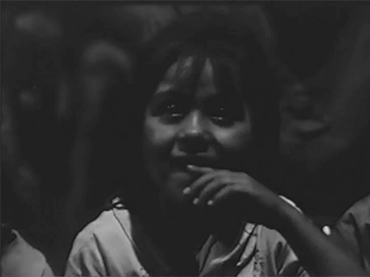
35mm, original version b/w, 23’Por primera vez is a declaration of love for cinema. The film shows the work of a mobile cinema which, with the influence of the Pedagogical Missions from the 1930s in Spain, takes films to a remote village for the first time. In Nuestra olimpiada en La Habana, the Olympics are in fact an international chess tournament in which José Massip presents Fidel Castro asone of the chess players, a familiar yet strange figure. ICAIC would focus a growing number of documentaries on the exploration of cubanía, the island’s mixed-race identity. Acerca de un personaje que unos llaman San Lázaro y otros llaman Babalú falls into the category of afilm survey via an anthropological investigation into the festivity of a saint who symbolises the syncretism of Cuban religious beliefs. En la otra isla is one of Sara Gómez’s most remarkable films in its exploration of a scattered set of individual portraits of the inhabitants of Isla de Pinos, commenting on their stories and reflections as it tackles racism, a taboo subject for many of the era’s film-makers.
Hablando del punto cubano, by Octavio Cortázar, is a fascinating example of the Cuban documentary’s shift towards music.
-
1 July 2016
Perspectives II
With a presentation by Chema González, the Museo Reina Sofía’s Head of Cultural and Audiovisual Activities
Alejandro Saderman
Hombres de Mal Tiempo (Men of Bad Times), 1968
35mm transferred to digital archive, original version, b/w, 32’Santiago Álvarez
LBJ, 1968
35mm, original version, b/w, 18’Despegue a las 18:00 (Take-Off at 18:00), 1969
35mm transferred to digital archive, original version, b/w, 41’Nicolás Guillén Landrián
Café Arábiga, 1968
35mm transferred to digital archive, original version, b/w, 18’Sara Gómez
Isla del Tesoro (Treasure Island), 1969
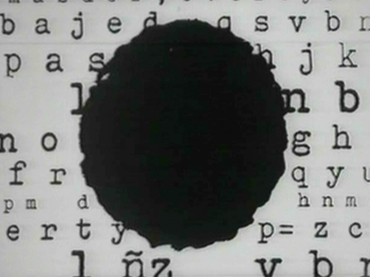
35mm transferred to digital archive, original version, b/w, 10’Hombres de Mal Tiempo, made by Argentinian film-maker Alejandro Saderman, is a film mediation on the representation of history, where five centenarian war veterans from the War of Independence gather to share their memories and instruct the actors on staging the experience. Santiago Álvarez’s LBJ is pure political satire — an astonishing visual and musical montage made from found footage, and with no narration or precise message. Despegue a las 18:00, also by Santiago Álvarez, states its intent in the opening credits: “A didactic, informative, political propagandist film on a people in revolution, anxious anddesperate to find a way out of the terrible inheritance of underdevelopment”. In Café Arábiga, Nicolás Guillén Landrián forms a counterpoint to Santiago Álvarez. The film’s editing, a textual-sound remix with the Beatles and the poetry of Nicolás Guillén and the abstraction of the subtitles, moves away from political satire and towards a subtle, poetic project. The session concludes with Sara Gómez’s film Isla del Tesoro, a short piece which juxtaposes the Presidio Modelo prison, where Batista imprisoned Fidel Castro, and the production of citrus fruits dubbed “the Grapefruits of Treasure Island. Product of Cuba”.
-
2 July 2016
Long Struggles
Santiago Álvarez
79 primaveras (79 Springs), 1969
35mm, original version, b/w, 25’
Manuel Octavio Gómez
La primera carga al machete (The First Charge of the Machete), 1969
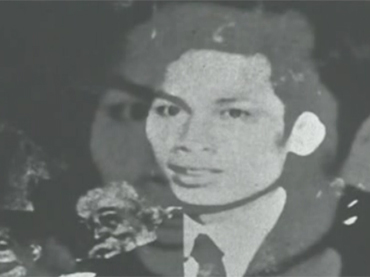
35 mm, original version, b/w, 84’In 79 primaveras Santiago Álvarez pays a lyrical tribute to Ho Chi Minh, its title referring to the age of the Vietnamese leader at the time of his death in one of the most atypical biographical documentaries in the history of film. The funeral is presented with the music ofIron Butterfly and stills from the film burst into flames on the same screen.
Manuel Octavio Gómez’s La primera carga al machete straddles documentary and event. Close in time and method to Peter Watkins, Gómez films a famous battle in the War of Independence of 1868 in a similar form to the modern documentary reportage, completed with interviews with the warring factions. In the film, part of a series of ICAIC productions to commemorate the wars of independence against Spain, Gómez opts for a fully experimental approach, both visually and narratively. The result is the opposite to conventional historical cinema, the bombast of which Gómez found insufferable.
-
7 July 2016
Foreign
Robert Drew Associates
Yanki No!, 1960
16mm transferred to digital archive, original version with Spanish subtitles, b/w, 60’Chris Marker
La Bataille des Dix Millions, 1970
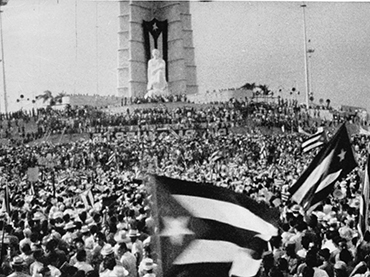
16mm transferred to digital archive, original version with Spanish subtitles, b/wShot for the ABC television network by cinema verité pioneers Richard Leacock and Albert Maysles, under the direction of Robert Drew, Yanki No! examines Latin American attitudes towards the USA and concludes with a plea for better collaboration with Latin America. The film was the first time Fidel Castro had been disseminated among the North American public, although it would ultimately yield to the demands of the commissioning network. La Batailledes Dix Millions was Chris Marker’s second film on Cuba, nine years after ¡Cuba Sí!, whose lyrical eulogising of the Cuban Revolution led to its censorship in France. Although Marker would also remove the film from circulation for reasons unknown, he did leave us with this second, less effusive and more analytical, work. The film focuses on the failure of Fidel’s audacious call to obtain a ten-million-tonne sugar harvest, and comprises a mix of borrowed images, largely from Santiago Álvarez. At the time it was a powerful instrument of counter-propaganda and today the film offers a notable testimony of Cuba a decade on from the Revolution, when the country was attempting to manoeuvre against Cold War winds and currents.
-
8 July 2016
Perspectives III
Pastor Vega
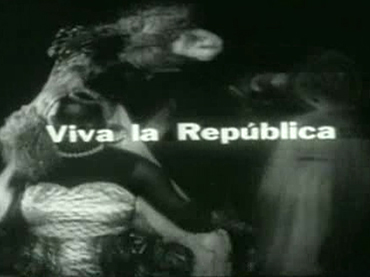
¡Viva la República!, 1972
35mm, original version, b/w, 100’¡Viva la República! did for the pre-history of the Cuban Revolution what Esfir Shub had done for the origins of the Russian Revolution via his great documentary montage The Fall of the Romanov Dynasty (1927). Vega had the complete archive of Cuban cinema at his disposal from its origins, when the birth of film coincided with the final chapters of the Cuban War of Independence. The current images with scenes of the said war were taken by cameras from Compañía Edison, with the film analysing this historical event step by step via old newsreels, photographs and political vignettes in an ironic, and at times playful, tone, drawing on fragments of found footage.
-
9 July 2016
Wide Lens
Manuel Herrera
Girón, 1972
35mm, original version, b/w, 120’
Girón is a highly original docudrama on the failed North American invasion of Bay of the Pigs in 1961, where the conventional cinematic representation of heroism is deconstructed. The film combines archive images, interviews, stagings and voice-overs to thread together a narrative of events, rendering an account of what happened via normal people — not experts, analysts or leaders — who were involved before returning to their lives. These characteristicsare all amplified through being filmed in a panoramic screen format, a characteristic of the war genre, with the effect of subverting the dominant mode of film as spectacle. The testimonies are recorded in real locations as the film reconstructs the stories behind its protagonists while they speak. The difference between documentary and staging is highlighted rather than concealed, resulting in a deconstruction of the war film imaginary.